

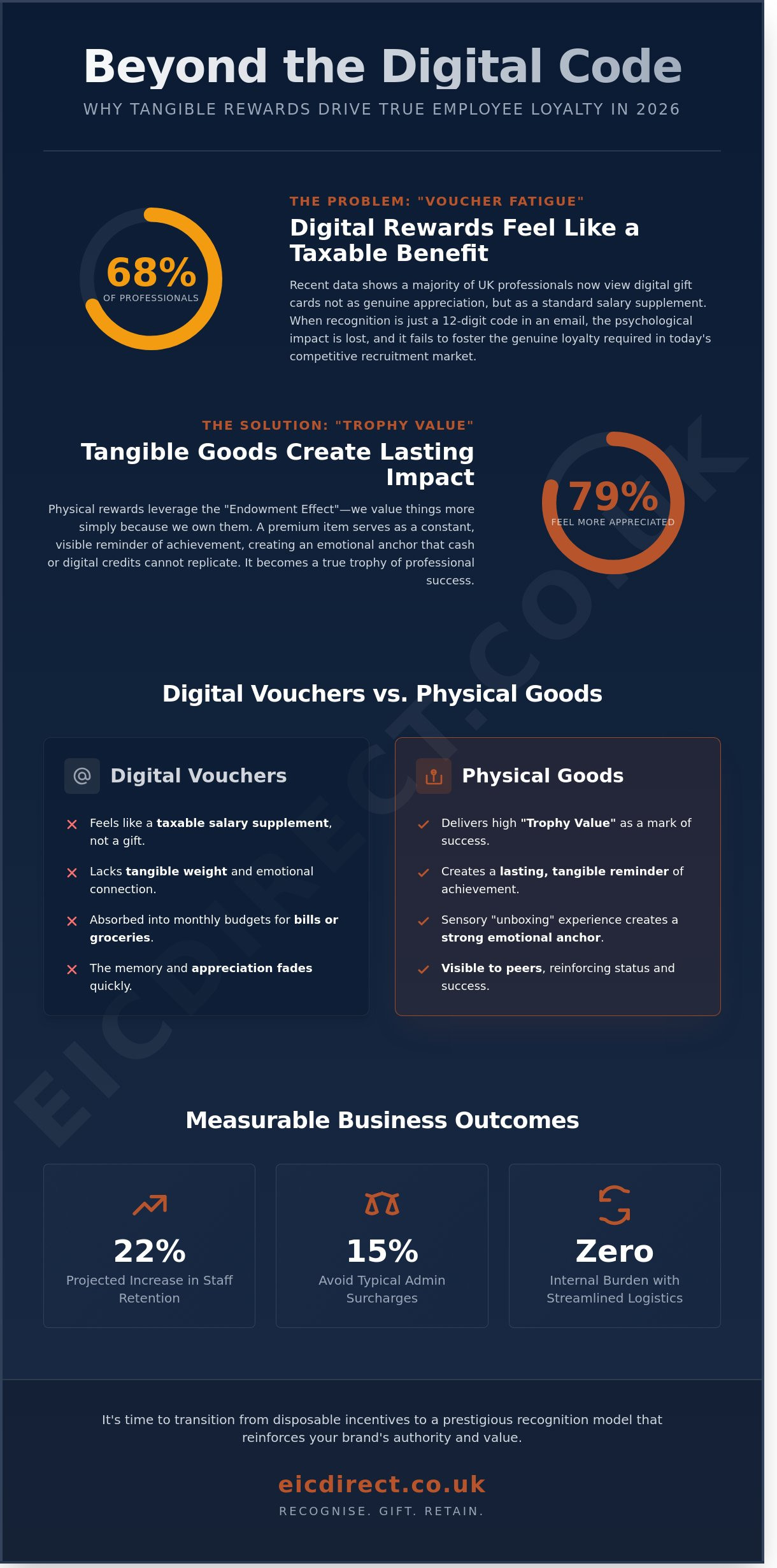
Recent data indicates that 68% of UK professionals now view digital gift cards as a taxable benefit rather than a genuine gesture of appreciation. When recognition is reduced to a 12-digit code sent via email, the psychological impact of the reward is lost to “voucher fatigue.” You’ve likely noticed that these digital-only employee reward schemes often feel like a standard salary supplement. They lack the tangible weight required to foster genuine loyalty in a 2026 recruitment market where top-tier talent expects more than a transactional relationship.
This guide provides a methodical framework for designing recognition strategies that leverage premium physical goods to drive measurable results. You’ll discover how to source high-demand brands like Apple at trade prices, avoiding the 15% administrative surcharges that typically inflate HR budgets. We’ll outline a streamlined logistics process that removes the operational burden from your internal teams while improving staff retention rates by a projected 22%. It’s time to transition from disposable incentives to a prestigious recognition model that reinforces your brand’s authority and value.
Key Takeaways
- Understand why tangible physical goods offer superior “Trophy Value” compared to digital vouchers, serving as a lasting reminder of professional achievement.
- Learn how to design comprehensive employee reward schemes that effectively balance immediate performance recognition with significant long-term service milestones.
- Identify the specific high-impact categories and premium brands required to ensure your recognition strategy meets the expectations of a modern UK workforce.
- Evaluate the logistical benefits of professional fulfilment over “DIY” methods to mitigate the hidden costs of storage, shipping, and item breakage.
What are Employee Reward Schemes and Why is Recognition Evolving?
Employee reward schemes are formalised frameworks designed to identify, acknowledge, and incentivise specific workforce behaviours. These programmes serve as a vital mechanism for reinforcing corporate values and achieving operational targets. Historically, recognition was often a passive process, limited to “years of service” awards that triggered only after decades of employment. In 2026, the landscape has transitioned towards agile, performance-based structures. Modern schemes prioritise immediate impact and tangible value to ensure that high-performing individuals feel a direct connection between their output and their rewards.
This shift is a necessary response to digital saturation. As professional lives become increasingly mediated by screens, the psychological value of a digital voucher or a generic email has plummeted. Organisations now focus on tangible recognition; physical, high-quality items that provide a lasting reminder of achievement. Aligning these employee reward schemes with business objectives, such as a 12% increase in staff retention or a measurable rise in quarterly output, ensures the programme remains a strategic investment rather than a discretionary expense.
The Evolution of Staff Motivation
The widespread adoption of hybrid work models has fundamentally altered how businesses maintain morale. With approximately 40% of the UK workforce operating remotely for at least part of the week, traditional office-based perks have lost their relevance. Employers are moving away from generic office-bound benefits towards more sophisticated staff incentives that offer genuine utility. A well-structured scheme acts as a trust signal, demonstrating that a company values its human capital with the same rigour it applies to its technical infrastructure.
Why Generic Perks are Losing Their Impact
The phenomenon of “Voucher Fatigue” is a significant hurdle for modern HR departments. When a reward arrives as a digital code, it often feels like a taxable supplement to a payslip rather than a meaningful gift. Low-quality promotional items like plastic pens or branded keyrings fail to project professional prestige and often end up as waste. To maintain the integrity of a recognition strategy, businesses must opt for premium brands. High-end hardware or luxury goods carry an inherent “trophy value” that reinforces an individual’s status within the organisation. This clinical approach to quality ensures the reward matches the calibre of the performance it’s intended to recognise. For a deeper understanding of how enterprise-level organisations are responding to this shift, the latest high-end employee rewards trend analysis for UK enterprises provides essential benchmarking data for 2026.
The Psychology of Tangible Rewards: Why Physical Goods Outperform Vouchers
Effective employee reward schemes rely on more than just the monetary value of a gift. They depend on the “Endowment Effect,” a psychological principle where individuals value an object more highly simply because they own it. When a staff member receives a physical item, they form an immediate, tangible connection to the reward that digital credits or cash bonuses cannot replicate. Cash is frequently absorbed into a monthly budget to pay for utility bills or groceries, which strips the reward of its celebratory context. In contrast, a physical product remains a distinct symbol of achievement. The common assumption that cash is always preferable is directly challenged by the evidence around tangible rewards and the myth of cash superiority in 2026 recognition, which demonstrates why physical goods consistently outperform liquid assets in building lasting employee engagement.
A 2023 study by the Incentive Research Foundation found that 79% of employees feel a stronger sense of appreciation when receiving tangible goods compared to cash equivalents. This preference stems from the sensory experience. The weight of a box, the texture of the packaging, and the process of unboxing create a lasting memory. This emotional anchor ensures the reward is associated with the company’s appreciation for years, rather than being forgotten as soon as a bank balance settles.
The “Trophy Value” of Premium Electronics
Trophy Value is the enduring psychological prestige associated with a physical mark of success. Unlike a one-off performance bonus that disappears into a current account, a premium electronic device on a desk serves as a permanent reminder of a specific professional win. If an employee receives a high-end tablet or a noise-cancelling headset, that item becomes a functional part of their daily life. Every time they use it, they’re reminded of the specific project or milestone that earned it. Selecting the right hardware is critical, and a dedicated guide to branded premium electronics for business can help you identify the specific devices that command the most professional respect and deliver lasting trophy value.
- Longevity: A quality mechanical watch or a professional-grade speaker system can last for over a decade.
- Visibility: Physical rewards are visible to peers and family, providing a subtle but constant sense of status.
- Utility: Items that improve an employee’s quality of life outside of work create a deeper bond between the individual and the organisation.
Cognitive Lasting Power: Physical vs. Digital
Digital vouchers often suffer from “Hedonic Adaptation,” where the recipient quickly adjusts to the new state and the excitement fades. Research indicates that the joy from a salary increase or a digital code typically dissipates within 90 days. Physical rewards resist this trend because they’re not viewed as part of a standard compensation package. They’re perceived as a gift, which triggers a different neural response related to social bonding and gratitude.
Social proof also plays a critical role in 2026. Data from 2024 shows that employees are 3.5 times more likely to share a photo of a physical reward on professional networks like LinkedIn than they are a screenshot of a voucher code. This organic sharing significantly boosts the employer brand, showcasing the company as a premium place to work. Maintaining this level of professional excellence requires the same attention to detail as managing your statutory compliance and electrical safety obligations. By choosing high-quality physical goods, businesses ensure their recognition strategy is as robust and reliable as their operational infrastructure.
Designing a Tax-Efficient and Impactful Reward Strategy
A successful recognition strategy requires a structured approach that ensures fairness across every level of the organisation. Data from 2024 indicates that 74% of UK employees feel demotivated when recognition is perceived as exclusive to sales or senior management. Effective employee reward schemes must be accessible to warehouse staff, administrative teams, and technical engineers alike. This inclusivity prevents departmental silos and fosters a unified company culture.
Balance is critical. You should distinguish between “Instant Recognition” for daily wins and “Milestone Rewards” for long-term service. Instant rewards, such as a £20 voucher for a specific project success, provide immediate positive reinforcement. Milestone rewards mark significant tenures or major achievements, often involving higher-value items. Integrating these rewards into formal employee recognition programs ensures that the process remains consistent and transparent rather than sporadic.
Navigating UK Tax and Compliance for Non-Cash Rewards
Compliance with HMRC regulations is essential to avoid unexpected tax liabilities for staff. Under the “Trivial Benefits” statutory exemption (Section 323A of ITEPA 2003), employers can provide gifts up to £50 tax-free. These gifts must not be cash or cash vouchers, and they cannot be a reward for specific work performance. For higher-value items like Apple AirPods or iPads, the employer must account for tax and National Insurance. Reporting these via a PAYE Settlement Agreement (PSA) is often the most professional route. It allows the company to settle the tax on the employee’s behalf, ensuring the gift remains a “true” reward without a corresponding deduction on the recipient’s next payslip.
Aligning Rewards with Company Culture and Values
The items you choose to offer reflect your brand’s internal standards. Sourcing luxury hampers for staff who demonstrate exceptional attention to detail reinforces a commitment to excellence. Employee reward schemes work best when they offer a curated selection of premium goods, allowing the individual to choose what suits their lifestyle. This element of choice is powerful; a technician might value a high-spec toolkit, while an office manager might prefer a designer coffee machine. Providing these options demonstrates that the business views its employees as individuals, reinforcing teamwork and long-term loyalty through personalised appreciation. Integrating bespoke, handmade items from Emporium of Arts & Crafts into your selection can further enhance this personal connection, offering rewards that feel genuinely unique.
Key Criteria for Selecting High-Impact Rewards
Effective employee reward schemes in 2026 must move beyond the transactional. Modern rewards serve as a physical manifestation of a company’s respect for its workforce. To achieve high impact, selection must focus on three core categories: premium technology, lifestyle enhancement, and luxury consumables. A 2025 industry report indicated that 84% of UK staff feel more valued when receiving a branded physical gift compared to a digital code.
Quality is the primary metric of success for modern employee reward schemes. Selecting “promotional” grade items, such as low-quality branded plastic pens or thin cotton tote bags, actively devalues the sentiment behind the award. These items often fail or break within 60 days. This failure undermines corporate sustainability goals and signals a lack of investment in the individual. High-impact schemes prioritise durability and utility over cheap branding.
The Apple Effect: Why Premium Brands Matter
Brand recognition is a proxy for reliability and status. Apple products, including AirPods, iPads, and AirTags, maintain universal appeal across all demographics. When an employer provides a £200 Apple product, the perceived value remains high because the market price is strictly controlled and the quality is guaranteed. In contrast, a £200 generic tablet often feels like a cost-saving exercise. High-end tech signals that the organisation values the employee’s status and provides tools they’ll actually use daily. For a comprehensive overview of sourcing the right devices at the right price points, refer to this detailed guide on branded premium electronics for business to ensure your selections reflect genuine corporate prestige.
Lifestyle and Luxury: Beyond the Office Desk
The boundary between work and home has shifted permanently. Effective corporate rewards now support leisure and wellbeing. This includes professional-grade BBQ grills, high-performance gym gear, and premium kitchen appliances like espresso machines. These items facilitate a better work-life balance by improving the employee’s personal environment.
Luxury food hampers remain a staple for diverse teams because they offer a sophisticated, neutral experience. A well-curated hamper featuring artisan British produce provides a high-impact “unboxing” experience that generic gifts cannot match. By choosing items that serve specific hobbies, from professional golf prizes and equipment to gardening tools, businesses demonstrate a genuine understanding of their staff’s identities.
Implementing Your Scheme: Professional Fulfilment and Logistics
The successful execution of employee reward schemes depends entirely on the efficiency of the final mile. Many organisations attempt to manage reward fulfilment internally, often underestimating the significant operational burden this creates. This “DIY” approach frequently leads to hidden costs that erode the scheme’s overall return on investment. For example, internal storage requirements for high-value electronics can increase corporate insurance premiums by up to 15%. Furthermore, shipping fragile items without professional-grade logistics often results in a breakage rate of 4% based on 2024 industry benchmarks. These logistical failures don’t just cost money; they diminish the perceived value of the recognition in the eyes of the recipient.
The Benefits of a Trade-Only Fulfilment Partner
Partnering with a specialist like EiC Direct removes the complexities of procurement and inventory management. Businesses gain direct access to bulk pricing on premium brands, often avoiding the 25% retail markups found on the high street. Authenticity is a critical factor; trade-only partners guarantee genuine goods backed by full manufacturer warranties. This ensures that if a technical fault occurs, the employee is protected by official support channels rather than being left with a grey-market product that lacks a valid UK warranty. Specialist partners handle the heavy lifting of logistics, allowing HR teams to focus on strategy rather than tracking parcels.
Streamlining Bulk Rewards for National Distribution
Managing rewards for multi-site teams or remote workers requires a robust distribution network. Reliability across the UK and Ireland is essential to maintain fairness in delivery times. During peak periods such as December, where seasonal surges can increase delivery volumes by over 300%, internal departments often struggle to cope. Professional fulfilment services manage these peaks with clinical efficiency. They ensure that staff Christmas gifts or performance bonuses arrive on schedule without manual intervention from management. This level of precision transforms the reward process into a seamless extension of the corporate brand. It provides peace of mind that every reward is delivered with the same professional standards expected in any other area of the business.
A professional approach to fulfilment is the key to a frictionless HR experience. By removing the administrative friction of storage and shipping, companies can ensure their recognition strategy is both scalable and sustainable. To see how professional sourcing can improve your results, explore our trade-only catalogue of premium rewards at EiC Direct.
Future-Proofing Your Recognition Strategy
Building effective employee reward schemes for 2026 requires a shift from generic digital vouchers toward high-impact, tangible goods. Physical rewards generate stronger emotional connections and higher retention rates than cash-based alternatives. You must ensure your strategy is both tax-efficient and scalable to meet modern corporate standards. This involves selecting items with high perceived value that align with your brand’s professional identity and operational goals.
Logistical precision is the final pillar of a successful programme. Since 1992, EiC Direct has served as a specialist B2B trade-only supplier, helping businesses navigate the complexities of procurement and delivery with clinical efficiency. We’re an authorised supplier of Apple and premium luxury lifestyle brands, ensuring your staff receive the highest quality products directly. By removing unnecessary middlemen, we provide a streamlined, cost-effective path to professional reward fulfilment that protects your bottom line.
It’s time to elevate your corporate recognition and secure a dependable foundation for your business growth. Partner with EiC Direct for premium trade-only reward fulfilment and experience the peace of mind that comes with expert-led logistics.
Frequently Asked Questions
What is the best way to structure an employee reward scheme for a remote team?
The most effective structure for a remote team prioritises direct-to-door logistics and digital integration. In 2024, 44% of UK workers operated remotely at least some of the time. You should use a centralised platform that automates delivery to ensure parity between home-based and office-based staff. This prevents the “out of sight, out of mind” bias and ensures every employee reward scheme remains consistent across your entire workforce regardless of their physical location.
Are physical employee rewards tax-deductible for UK businesses?
Physical rewards are tax-deductible if they meet the HMRC “Trivial Benefit” criteria. For a gift to be exempt from tax and National Insurance, it must cost £50 or less, not be cash or a cash voucher, and not be a reward for performance or a contractual requirement. If the gift exceeds £50, you must report it on a P11D form or handle it through a PAYE Settlement Agreement (PSA) to ensure statutory compliance.
Why should I choose physical gifts over vouchers for my staff?
Physical gifts create a lasting psychological connection that digital vouchers often lack. A 2023 study by the Incentive Research Foundation found that 78% of employees prefer tangible items because they serve as a persistent reminder of achievement. Vouchers are frequently absorbed into daily household spending like groceries. High-quality physical items provide a sense of status and appreciation that reinforces your employee reward schemes more effectively than a simple bank transfer or code.
How often should employees receive rewards in a formal scheme?
A formal scheme should operate on a tiered schedule; monthly for peer-to-peer recognition and annually for major performance milestones. Data from 2025 indicates that companies with monthly recognition cycles see 31% lower voluntary turnover than those with annual-only reviews. You should maintain a consistent rhythm to ensure recognition feels like a core business process rather than a sporadic event. This regular cadence keeps motivation high throughout the financial year.
Can I customise the rewards based on different department goals?
You can and should customise rewards to align with specific departmental KPIs and operational goals. For example, a sales team might focus on revenue targets, while an engineering team prioritises project delivery dates or safety compliance. Tailoring the rewards ensures they remain relevant to the daily challenges of each role. This approach ensures that 100% of your staff feel their unique contributions are being measured and valued correctly by the business.
What are the most popular employee rewards in the UK for 2026?
The most popular rewards for 2026 include high-specification home office hardware, premium wellness subscriptions, and carbon-offsetting initiatives. Recent market trends show a 25% increase in demand for sustainable physical products over generic luxury items. Employees currently value items that improve their work-life balance or personal health. Providing tech like noise-cancelling headphones or ergonomic tools remains a top choice for UK businesses looking to improve staff retention rates. For a full breakdown of what leading UK enterprises are investing in, the high-end employee rewards 2026 trend analysis outlines the specific categories and brands driving the strongest engagement results.
How do I ensure the rewards I choose are high quality and authentic?
You ensure quality by vetting suppliers against ISO 9001 standards and requesting physical samples before committing to a bulk order. Authentic rewards must reflect your brand’s commitment to excellence and professional standards. Check for warranties and British Standard certifications on all electrical or safety-related items. Using a direct service model rather than third-party resellers often provides better oversight of the supply chain and guarantees the provenance of the goods.
Is it better to have a few high-value rewards or many small ones?
A balanced strategy that combines frequent small rewards with occasional high-value items is most effective. Research suggests that 80% of employee engagement comes from regular, low-cost recognition, but the high-value rewards provide the aspirational element of the scheme. You shouldn’t choose one over the other. Instead, allocate 60% of your budget to frequent small recognitions and 40% to significant annual awards to maintain long-term engagement across the organisation.