
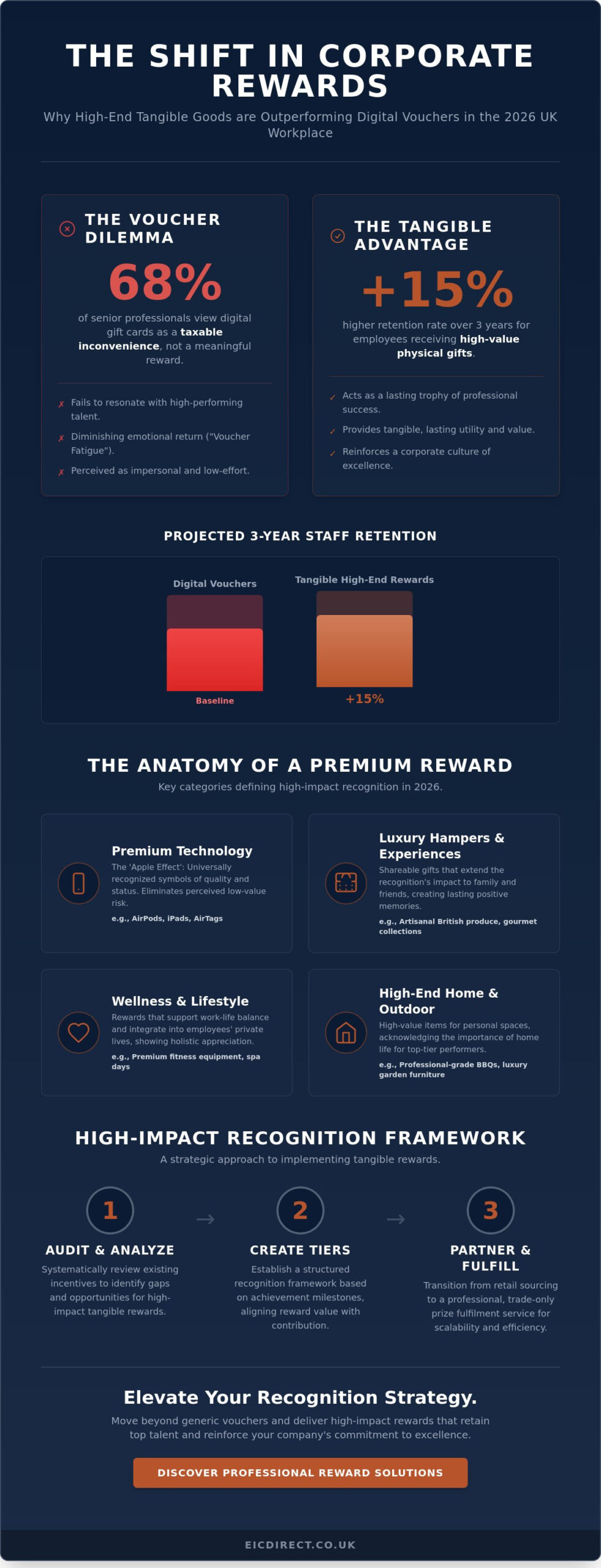
The standard retail voucher has officially transitioned from a perk into a symbol of corporate indifference. Recent 2025 data from UK workplace engagement surveys indicates that 68% of senior professionals now view digital gift cards as a taxable inconvenience rather than a meaningful gesture. You likely see this reflected in your own retention rates, where generic “swag” and impersonal codes fail to resonate with high-performing talent. This shift is why forward-thinking enterprises are investing in high-end employee rewards that offer tangible, lasting value over fleeting digital credits.
You understand that rewarding excellence shouldn’t create a secondary administrative crisis for your HR department. This article outlines why premium physical assets are replacing vouchers and how to implement a high-impact recognition strategy that’s both scalable and professional. You’ll learn how to manage the logistics of bulk distribution while securing a projected 12% reduction in staff turnover through more precise appreciation. We’ll examine the operational framework required to deliver a seamless reward experience that meets the professional expectations of the 2026 UK market.
Key Takeaways
- Understand the shift from digital vouchers to tangible goods and why physical items now provide more effective recognition for UK workforces.
- Identify the specific product categories that define high-end employee rewards in 2026, including the continued dominance of premium technology and wellness equipment.
- Learn how to streamline your procurement process by transitioning from retail sourcing to professional, trade-only prize fulfilment services.
- Discover a methodical approach to auditing staff incentives and establishing a tiered recognition framework based on achievement milestones.
- Evaluate emerging trends in corporate gifting, such as bespoke luxury hampers, to ensure your reward strategy remains competitive and high-impact.
The 2026 Shift: Why Vouchers are Fading and High-End Rewards are Rising
The corporate landscape in the United Kingdom is undergoing a fundamental shift in how it acknowledges professional achievement. By 2026, the reliance on digital gift cards is projected to decline as firms prioritise high-end employee rewards. These rewards are defined as premium, tangible goods that provide lasting utility and reflect a company’s commitment to quality. Unlike digital credits, which often disappear into monthly household spending, physical items serve as a constant reminder of professional success. This transition reflects a move toward operational excellence in human resources, where the focus is on the long-term impact of an incentive rather than the ease of its distribution.
Modern employee recognition programs now focus on the psychological weight of the gift. A 2024 industry report found that 68% of UK workers felt digital vouchers felt like “taxable admin” rather than a genuine thank you. High-end rewards bridge this gap by offering something substantial. This alignment with premium brand positioning is essential for UK enterprises that want to project an image of excellence to both clients and staff. When a business provides a high-specification item, it signals that the recipient’s contribution is valued at a professional level, reinforcing a culture of high standards and reliability.
The Death of Generic Swag
Low-cost promotional items like plastic pens or branded mugs are now viewed as detrimental to high-end brand perception. In the 2026 market, these items are often discarded, creating a negative return on investment and suggesting a lack of effort from leadership. Companies are shifting toward lifestyle integration. This involves selecting high-end employee rewards that employees value in their private lives, such as premium kitchenware or luxury travel accessories. The goal is to move from promotional clutter to professional incentives that hold real-world value and utility.
The ROI of Tangible Recognition
The financial justification for physical rewards is found in long-term retention data. Analysis of UK corporate performance indicates that employees who receive high-value physical gifts show a 15% higher retention rate over a three-year period compared to those receiving cash equivalents. These items act as a permanent trophy in the recipient’s daily life, reinforcing their value to the organisation every time the item is used. Voucher Fatigue is the diminishing emotional return of digital-only incentives. By investing in quality, businesses secure a more profound psychological connection with their workforce, ensuring that recognition is both felt and remembered. For employees who are also exploring ways to improve their personal financial health, I Need Cash offers a guide to homeowner loans and financial fluidity.
The Anatomy of Premium Rewards: What Defines ‘High-End’ in 2026?
The definition of high-end employee rewards has shifted toward items that offer both tangible utility and high social currency. In the 2026 UK corporate landscape, luxury is measured by brand reputation and the ability of a product to integrate into a modern, hybrid lifestyle. Data from recent industry surveys indicates that 64% of UK employees value physical rewards more than they did three years ago, provided the items are of a professional grade.
The ‘Apple Effect’ remains a primary driver in incentive selection. Products such as AirPods, iPads, and AirTags are the gold standard because they represent a universal benchmark of quality. These devices are not just tools; they are status symbols that reflect the company’s own commitment to excellence. When an enterprise chooses these brands, it eliminates the risk of the reward being perceived as low-quality or disposable.
While tech is dominant, sensory experiences are seeing a resurgence. Luxury food hampers have evolved into shareable recognition experiences. High-quality hampers featuring artisanal British produce allow employees to share their success with family and friends, extending the impact of the reward beyond the individual. This shareable nature increases the emotional resonance of the recognition, making it more memorable than a standard bank transfer.
Outdoor luxury is also a growing category. As more professionals invest in their home environments, items like garden furniture and professional-grade BBQs have become highly sought-after prizes for top-tier sales performance. These rewards acknowledge the importance of work-life balance and provide a lasting presence in the employee’s personal life.
Premium Electronics and Professional Tech
Sourcing branded premium electronics for business is the most effective way to ensure reward programs meet the expectations of a sophisticated workforce. High-end audio, particularly noise-cancelling headphones and smart speakers, addresses the practical needs of the modern professional. These items facilitate focus in varied environments, making them a logical choice for high-end employee rewards. iPads and tablets remain the ultimate versatile gift. They provide a high-spec platform for both professional development and personal leisure, ensuring the reward is used daily.
Lifestyle and Home Elevation
Garden furniture and outdoor ovens have emerged as premium sales prizes, reflecting a shift toward lifestyle-oriented incentives. For milestone service awards, traditional items like professional golf equipment and luxury watches still carry significant weight. These products signify a long-term investment in the employee. Homeware and kitchen appliances, such as high-end espresso machines, provide practical luxury. These items offer a constant, positive association with the employer every time they’re used. For companies looking to refine their incentive strategy, choosing a dependable procurement partner ensures these high-value items are delivered with professional efficiency.
Strategic Sourcing: Navigating the B2B Fulfillment Landscape
Procuring high-end employee rewards through standard retail channels often results in operational bottlenecks and tax inefficiencies. UK enterprises are increasingly moving away from retail-level purchasing. They’re opting for professional prize fulfilment services instead. This shift is driven by the need for statutory compliance and VAT transparency that retail receipts cannot provide. Trade-only partners operate on a strictly B2B basis. This allows businesses to access pricing structures and stock allocations that aren’t available to the general public.
By 2026, the integration of live stock feeds has become a technical requirement for corporate reward schemes. Real-time inventory management prevents the reputational damage caused by offering items that are out of stock. Professional fulfilment partners provide direct API links into their warehouse management systems. This ensures that when an employee selects a reward, the item is physically present and reserved immediately. It eliminates the need for internal warehousing. Businesses can manage national campaigns without ever touching a physical box or managing a storage facility.
The Direct-to-Employee Model
Direct shipping to an employee’s residence reduces administrative friction by approximately 40% compared to office-based distribution. It’s a cleaner logistical process. The unboxing experience must mirror a luxury retail interaction to maintain the reward’s perceived value. Logistics providers now focus on white-glove delivery standards. This ensures the momentum of the recognition isn’t lost through poor packaging or delayed shipping times. Professional services handle the entire chain from pick-and-pack to final delivery confirmation, providing peace of mind to HR departments.
Scaling with No Minimum Order Quantities
Modern reward platforms require the flexibility to handle both a single micro-recognition gift and a 5,000-unit festive rollout. Trade-only models that offer no minimum order quantities (MOQs) provide this essential scalability. You get consistent trade-only pricing regardless of the order volume. This approach ensures that a regional office in Manchester receives the same high-end employee rewards experience as the London headquarters. It maintains brand consistency across the entire workforce. Centralised sourcing through a professional partner removes the variability found when local managers source rewards independently. This systematic approach to high-end employee rewards ensures that every item delivered meets the company’s quality standards without exception.
Implementing a High-Impact Recognition Framework
UK enterprises must transition from generic perks to a structured hierarchy of recognition. A 2024 survey by the Reward & Employee Benefits Association (REBA) found that 62% of employees feel overwhelmed by low-value digital vouchers that lack personal resonance. Your first step is to audit existing staff incentives to identify clutter. Eliminate low-engagement items that dilute the perceived value of your brand. By 2026, the focus shifts to quality over quantity. This requires a tiered system where daily praise is digital, but milestone achievements are marked by high-end employee rewards that carry physical weight.
Integrating physical goods into digital recognition platforms is essential for operational efficiency. Modern HR tech now allows for seamless fulfillment of tangible items directly from a recognition dashboard. This ensures that a reward for a high-performing team member in Manchester or London is delivered with the same level of speed and professionalism. Clear communication is vital. Staff should understand that the company prioritizes durable, high-quality items because it reflects the value placed on their long-term contribution. It’s a move toward sustainability and meaningful investment in human capital. For enterprises looking to eliminate manual overhead entirely, deploying automated gifts through an integrated B2B fulfilment engine ensures every high-performing staff member receives a premium item without manual intervention.
Milestone vs. Performance-Based Rewards
Distinguishing between length of service and specific output ensures the framework remains fair. For 10-year milestones, luxury watches or designer luggage sets from brands like Tumi or Mulberry provide a lasting legacy. For quarterly sales targets, high-end tech like AirPods or premium noise-cancelling headphones offers immediate utility. Spontaneous physical gifts are particularly effective for remote workers. Sending a premium hamper or a high-spec coffee machine after a successful project launch bridges the physical gap and reinforces the company’s culture outside the office. For client-facing events and corporate hospitality, sourcing premium golf prizes for B2B tournaments ensures that every touchpoint reflects your company’s commitment to excellence.
Tax Efficiency and Compliance
Compliance remains a cornerstone of any corporate reward program. In the UK, employers must navigate HMRC rules regarding Trivial Benefits, which apply to gifts under £50. Rewards exceeding this value, such as high-end employee rewards, usually incur a tax liability that is often handled via a P11D or a PSA (PAYE Settlement Agreement). Aligning these choices with ESG goals is also a 2026 priority. Beyond rewards, firms looking to improve their environmental footprint can visit Ethernetics to explore energy-saving solutions for their telecommunications and data infrastructure. Selecting rewards from sustainable manufacturers ensures the program meets corporate social responsibility standards. Equitable distribution across all demographics is not just a moral requirement; it’s a professional necessity to ensure no group is disadvantaged by the selection criteria.
The Future of Corporate Gifting: Tangible Trends for 2026 and Beyond
The landscape of high-end employee rewards is shifting toward functional, long-term value. In 2026, UK enterprises are prioritising wellness tech and high-end gym equipment for home offices. This shift reflects a commitment to the physical health of the workforce. Peloton bikes and high-spec rowing machines have become standard inclusions in executive incentive packages. These items provide a daily reminder of the firm’s investment in the individual.
Bespoke luxury hampers remain the premier choice for corporate rewards. They offer a sensory experience that digital codes cannot replicate. However, the procurement process is now more rigorous. Smart businesses use a ‘Trade-Only’ supplier model to manage corporate liability effectively. This approach ensures that all products meet UK safety standards and statutory compliance requirements. It eliminates the risks associated with consumer-grade retail chains that lack the logistics for large-scale corporate distribution.
The Rise of Personalised Premium Goods
Custom branding on high-end power banks and tech accessories is evolving. The focus is now on subtle, laser-etched logos that maintain a luxury aesthetic. If a brand is too prominent, the item loses its perceived value as a personal gift. For procurement teams navigating battery safety certifications and IATA carry-on regulations, sourcing custom branded power banks that meet UK compliance standards is an essential step before committing to bulk orders. Businesses are moving away from disposable items in favour of high-utility hardware. Industry data suggests a massive shift in strategy; by 2027, 70% of UK firms will have phased out generic vouchers in favour of physical goods. Employees value tangible items that hold their worth over time.
Partnering for Success
Selecting a partner involves more than just browsing a website. You need a specialist that handles both international sourcing and complex logistics. A diverse catalog is essential. It should include everything from the latest Apple technology to premium garden furniture. This variety allows for a tiered recognition system that suits every level of the organisation. Contact EiC Direct to explore our trade-only premium reward catalog and secure your supply chain for the coming year.
Building a legacy of recognition requires a move away from the ephemeral. High-end employee rewards serve as a physical anchor for corporate culture. When an employee uses a premium tool or enjoys a luxury gift at home, the sense of professional value is reinforced. This strategic approach to gifting ensures long-term loyalty and a clear return on investment. It’s about providing peace of mind through quality and compliance.
Future-Proofing Your Recognition Strategy
The transition toward tangible value is unavoidable. By 2026, UK enterprises will prioritize high-end employee rewards over generic vouchers to drive engagement in a competitive labor market. Transitioning to a premium recognition framework requires a partner capable of managing complex logistics and sourcing authentic goods with clinical precision. EiC Direct operates as a specialist B2B trade-only supplier, providing the professional reliability needed to manage national fulfillment across the UK and Ireland. We’re an authorised supplier of Apple and luxury home brands, which eliminates the operational risks associated with third-party marketplaces. Our direct service model ensures your corporate gifting strategy remains compliant while delivering the quality your workforce expects. It’s time to move beyond the limitations of digital credit and invest in assets that reflect your brand’s high standards. We’re ready to help you streamline your fulfillment and elevate your employee experience.
Partner with EiC Direct for your premium trade-only reward fulfillment to secure a seamless logistics solution for your 2026 recognition program.
Frequently Asked Questions
What are considered high-end employee rewards in 2026?
High-end employee rewards in 2026 focus on premium technology, sustainable luxury goods, and bespoke wellness packages. Market data shows that 68% of UK professionals value high-performance hardware, such as the latest M-series iPads, as a key recognition marker. These rewards move beyond traditional tokens. They offer functional value that integrates into the modern hybrid work-life balance while maintaining a sense of prestige.
Are physical rewards better than digital vouchers for employee retention?
Physical rewards often outperform digital vouchers in terms of psychological impact and long-term retention. While vouchers are convenient, they’re frequently spent on mundane essentials like groceries. Physical gifts, such as premium noise-cancelling headphones, serve as a lasting trophy on an employee’s desk. This constant visibility reinforces the connection between the individual’s hard work and the company’s appreciation; it’s a tangible reminder of success.
How can a UK business manage the logistics of sending physical rewards to remote staff?
UK businesses can manage remote logistics by using a dedicated fulfillment partner that handles storage, packaging, and tracked delivery. This direct-to-desk model ensures that high-end employee rewards arrive safely without internal HR teams handling heavy lifting. It’s a scalable solution that maintains professional standards. Reliable couriers provide proof of delivery, which is essential for auditing and compliance purposes within a corporate environment.
Can I get Apple products like iPads and AirPods in bulk for employee incentives?
You can procure Apple products like iPads and AirPods in bulk through authorised B2B distributors. These partners specialise in large-scale orders for the UK corporate sector. They often provide additional services like asset tagging or custom engraving. Bulk purchasing allows your business to secure consistent stock levels for quarterly or annual incentive programmes. This ensures every recipient receives the same high-quality experience without delay.
Is there a minimum order quantity for premium corporate rewards?
Minimum order quantities vary depending on the product tier and the supplier’s specific terms. For premium electronics, many UK distributors require a minimum of 10 to 20 units to access corporate pricing. Some bespoke luxury items might have higher thresholds, such as 50 units. It’s best to consult with a specialist provider to find a solution that fits your specific headcount and budget requirements before starting a campaign.
What high-end rewards are best for senior executive recognition?
Senior executive recognition is most effective when using high-spec technology or heritage luxury brands. Items like the latest MacBook Pro or premium leather accessories from established British brands are standard choices. The 2025 Executive Reward Survey found that 55% of leaders prefer functional gifts that offer a superior user experience. These rewards should always be paired with professional presentation to match the recipient’s seniority and contribution.
How do high-end rewards impact a company’s employer brand?
Investing in high-end rewards significantly strengthens your employer brand by signaling a culture of high standards. It proves that the business doesn’t cut corners when it comes to rewarding excellence. This approach helps in attracting top talent, as candidates often look for tangible evidence of a company’s investment in its people. A well-executed reward strategy can reduce recruitment costs by improving internal advocacy and staff loyalty over time.