

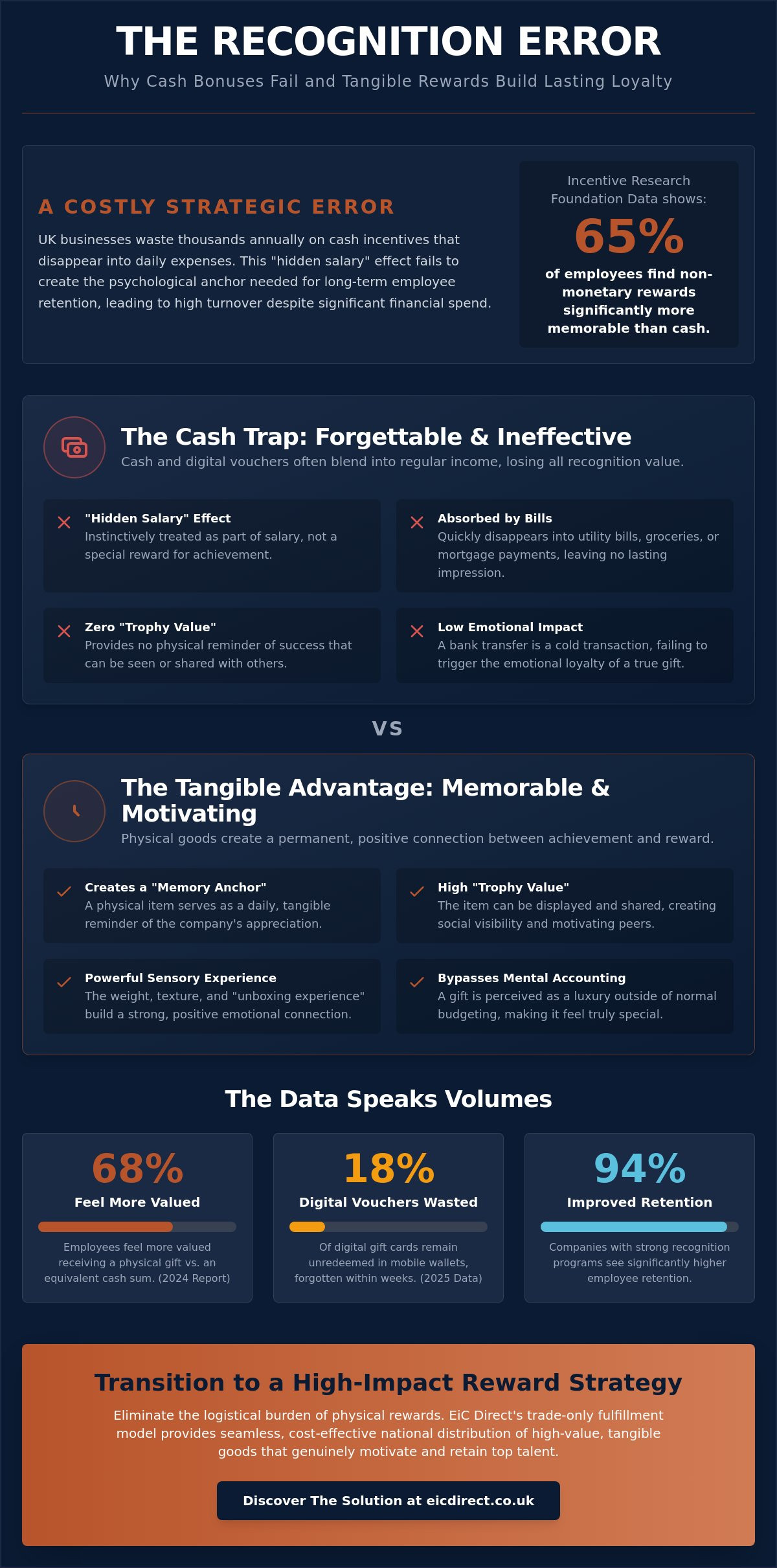
The traditional belief that cash is king in employee recognition is a strategic error that costs UK businesses thousands in wasted incentive spend every year. While a bank transfer is functional, it lacks the psychological weight required to secure long-term retention in a competitive 2026 labour market. Integrating tangible rewards into your corporate strategy provides a permanent, physical anchor for achievement that digital vouchers or salary top-ups simply cannot replicate. Recent data from the Incentive Research Foundation indicates that 65% of employees find non-monetary rewards significantly more memorable, yet many firms still rely on forgettable bank transfers that fail to drive engagement.
You likely understand the frustration of seeing a £500 bonus disappear into an employee’s monthly utility bills without leaving a lasting impression. It’s a common operational failure that leads to high turnover despite significant financial investment. This article demonstrates why premium physical goods outperform liquid assets in building genuine loyalty and psychological engagement. We’ll examine the specific ROI of high-impact fulfillment and provide a clear, professional framework for executing a distribution strategy that removes the administrative burden from your internal teams.
Key Takeaways
- Understand why cash often fails as a recognition tool due to “mental accounting” and how to trigger deeper psychological engagement through distinct rewards.
- Learn how modern trade-only fulfillment models have evolved to eliminate the traditional logistical burdens of national distribution and storage.
- Discover the strategic process of selecting high-value tangible rewards that leverage the “aspiration factor” to motivate diverse employee personas.
- Identify the practical steps required to transition from a standard voucher system to a high-impact, physical goods catalog.
- Explore how a direct-to-partner model ensures cost-effective and seamless delivery of premium items across all UK business operations.
Defining Tangible Rewards: Why Most Businesses Get It Wrong
The 2026 corporate landscape requires a clear demarcation between statutory pay and performance recognition. Many organisations fail to distinguish between “Total Compensation” and true “Recognition” programs. While salary and benefits fulfil a contractual duty of care, they rarely drive the emotional engagement necessary for long-term retention. In a professional framework, total compensation is the baseline for employment; recognition is the discretionary layer that validates individual contribution. Effective incentives must move beyond the transactional nature of a monthly payslip to create a lasting impact on the workforce.
Most businesses incorrectly categorise cash and digital vouchers as tangible rewards. From a psychological perspective, these are actually intangible. They lack a physical presence and fail to trigger the sensory responses associated with genuine gifting. A bank transfer is a numerical update on a screen; it doesn’t possess the weight or permanence required to build a “memory anchor” for the employee. Tangible rewards are physical assets that provide lasting utility and memory.
The “Hidden Salary” Trap of Cash Incentives
Employees instinctively categorise cash bonuses as utility. When a £500 bonus hits a UK bank account, it’s frequently absorbed by the cost of living, such as energy bills or grocery expenses. This creates a “hidden salary” effect where the reward loses its identity as a gift. It has zero “trophy value” because the recipient cannot point to a physical item and recall the achievement it represents. Digital vouchers suffer a similar fate. Data from 2025 reward cycles indicates that approximately 18% of digital gift cards remain unredeemed in mobile wallets, often forgotten within weeks of issuance.
Sensory Gifting: The New Standard for 2026
The modern standard for recognition focuses on the physical experience. The weight of a premium item and the tactical process of unboxing create an immediate emotional connection that digital codes cannot replicate. High-performance brands like Apple have demonstrated that the “unboxing experience” is a vital part of the product’s perceived value. Businesses are now moving away from generic “swag” like plastic pens or low-quality mugs. Instead, they’re opting for high-utility luxury items. A high-quality piece of technology or a weighted, designer home accessory provides a daily reminder of the company’s appreciation. For inspiration on premium lifestyle goods and tech accessories, visit EsKestate. This shift ensures the reward remains visible and functional, reinforcing the professional bond between the employer and the employee every time the item is used.
Myth #1: “Cash is the Ultimate Motivator” vs. Reward Distinctiveness
Cash often fails as a long-term motivator because of a psychological process called mental accounting. Most employees instinctively funnel cash bonuses into mundane categories like utility bills, insurance premiums, or mortgage repayments. This prevents the reward from standing out as a specific achievement. Tangible rewards bypass the rational, transactional side of the brain. They trigger emotional loyalty by acting as a gift rather than a payment. The reciprocity principle dictates that physical gifts feel more personal; they represent a genuine investment in the individual’s lifestyle. Because these items sit outside the standard payroll structure, they aren’t viewed as part of the basic contract. Reward distinctiveness ensures that incentives remain a clear mark of achievement rather than being absorbed into the employee’s baseline expectations of their monthly salary.
The Longevity of Physical Objects
A high-end watch or a premium garden furniture set provides a permanent reminder of professional success. Unlike a bank transfer that disappears into daily spending, these items carry “trophy value” for years. Social visibility is also a major factor. Employees rarely discuss their exact bonus amounts with colleagues, yet they’ll happily show off a new piece of technology or a luxury item. This creates a ripple effect of motivation across the team. A 2024 industry report indicated that 68% of employees feel more valued when receiving a physical gift compared to an equivalent cash sum. Research into prize incentives confirms that physical items lead to higher long-term retention rates. The positive association with the employer is renewed every time the object is used or seen in the home.
Breaking the Cycle of “Voucher Fatigue”
By 2026, many UK workforces are experiencing significant digital burnout. The shift away from digital-only rewards is a direct response to this “voucher fatigue.” While a £500 digital code feels like data on a screen, a physical iPad Pro offers a much higher perceived value than its RRP. It’s a tangible asset that provides immediate utility and pleasure. Using branded premium items is particularly effective for sales competition ideas where prestige and status are key drivers. Moving toward a model that prioritises high-quality tangible rewards ensures your recognition programme remains impactful. It demonstrates a level of care that cash simply cannot replicate. For businesses looking to implement a more robust recognition strategy, choosing a professional procurement partner can streamline the entire process.
Myth #2: “Physical Rewards are a Logistical Burden”
Many business owners still associate physical items with the inconvenience of stockrooms and manual postage. This view ignores the rapid evolution of trade-only fulfillment. By 2026, professional prize logistics have streamlined the delivery of tangible rewards into a hands-off process. The administrative burden has shifted from the employer to specialist partners who operate with clinical efficiency. These partners handle the heavy lifting, ensuring that recognition doesn’t create a secondary workload for HR or facilities teams.
The Direct-to-Employee Fulfilment Model
Modern recognition programs eliminate the need for internal storage or manual handling. Logistics partners now manage the entire chain from warehouse to the employee’s doorstep. This includes national distribution for large-scale items such as garden machinery or home gym equipment. During peak periods, like quarterly reviews or December recognition events, automated bulk fulfillment systems ensure high levels of accuracy in delivery. It’s a scalable solution that removes the operational friction often associated with physical goods. Most specialist providers now offer 48-hour tracked delivery as a standard, matching the speed expected in the digital age.
Quality Assurance and Duty of Care
Corporate liability is a serious consideration when gifting electrical items. Sourcing through a specialist trade partner mitigates these risks by ensuring all products comply with UK safety regulations. This includes strict adherence to BS 7671 standards for any integrated electrical components and the Health and Safety at Work Act. Employers have a clear duty of care to provide safe, reliable equipment to their workforce. Choosing premium tangible rewards over low-quality promotional items, such as cheap plastic keyrings or unbranded mugs, prevents the common pitfalls of technical failure or safety hazards.
Reliability is built into the process through manufacturer warranties. When a business provides high-end Apple electronics or kitchen appliances, they’re backed by the same protections as a retail purchase. This professional approach to sourcing protects the brand’s integrity. It ensures that the recognition effort isn’t undermined by faulty or substandard goods. Using a direct service model cuts out unnecessary middlemen. This provides a direct line to quality-assured products that meet all statutory requirements without the fuss of internal inventory management.
Strategic Selection: Identifying High-Value Tangible Goods
Selecting effective tangible rewards requires a data-driven approach to employee personas. A 2023 study by the Incentive Research Foundation found that 84% of UK businesses use non-cash rewards to drive performance. To succeed, companies must map rewards to specific milestones. Entry-level achievements might warrant high-utility tech, while ten-year anniversaries demand luxury items. The aspiration factor is critical here. You’re looking for items that provide a guilt-free luxury experience. Employees often hesitate to spend their own salary on a £300 espresso machine, but receiving one as a reward creates a lasting positive association with the brand. Integrating these choices into a formal employee recognition program ensures the process is transparent and scalable. It’s about moving away from generic gifts and toward items that hold genuine personal value.
Premium Tech and Electronics
Apple AirPods and iPads remain the gold standard for B2B rewards in 2026. These devices offer immediate prestige and functional value. For the 44% of UK professionals working in hybrid or remote roles, high-end audio equipment or professional-grade 4K cameras represent a significant upgrade to their daily operational efficiency. Branded power banks serve as a practical, high-utility option for field-based teams. These items aren’t just gadgets; they’re tools that facilitate better performance while acknowledging the recipient’s professional status. High-quality electronics also tend to have a longer shelf life in the employee’s mind compared to a one-off cash bonus that’s absorbed by monthly bills. Using tech as tangible rewards provides a constant, visible reminder of the company’s appreciation.
Lifestyle and Home Luxury
Rewards that extend into the home life of an employee often carry the highest emotional weight. Bespoke luxury food hampers, particularly those featuring regional UK produce, are effective for seasonal recognition or team-wide successes. For high-value sales prizes, items like outdoor pizza ovens or premium garden furniture provide a trophy value that cash cannot replicate. Businesses planning their Q3 strategy should explore summer incentives for 2026, which offer a curated selection of premium physical rewards including professional-grade BBQ equipment and luxury garden furniture that carry exceptional aspiration value. Executive rewards might include professional golf equipment or designer luggage sets. These choices reflect a sophisticated understanding of the recipient’s lifestyle and personal interests. By providing items that enhance leisure time, businesses demonstrate a genuine commitment to employee well-being beyond the office walls. This strategy builds a bridge between professional achievement and personal satisfaction, which is essential for long-term retention.
To find out how to streamline your reward procurement and compliance, consult with our specialist team.
Implementing a National Tangible Reward Strategy with EiC Direct
Transitioning from a voucher-based system to a physical goods catalog requires a structured shift in procurement logic. While vouchers often function as a temporary cash equivalent, tangible rewards provide a lasting physical anchor to the specific achievement being recognised. To implement this effectively, businesses must move away from retail-loop procurement and adopt a trade-focused fulfillment model. This ensures that the transition does not result in increased administrative friction or inflated unit costs.
EiC Direct operates as a trade-only partner, providing businesses with direct access to bulk fulfillment capabilities and professional pricing structures. By removing retail intermediaries, we provide a streamlined path from reward selection to doorstep delivery. Our model is built on a seamless reward pipeline that requires no minimum order quantities. This allows organisations to maintain agility; you can reward a single high-performer in a regional office or execute a nationwide rollout for thousands of employees with the same level of operational precision.
We focus exclusively on physical premium goods because the data shows a clear distinction in perceived value. In a 2024 industry study, 68% of UK employees reported that a physical gift felt more like a “true reward” than a digital code. Our methodology prioritises high-utility, high-prestige items that reinforce the bond between the employer and the workforce.
Scaling Your Recognition Program
Managing rewards for a national workforce often leads to increased overhead if handled internally. EiC Direct mitigates this by integrating tangible rewards directly into your existing staff incentives framework. This integration allows for automated fulfillment across multiple UK sites without adding headcount to your HR or procurement teams. To measure success, we recommend tracking ROI through engagement surveys; firms using physical goods frequently report a 14% higher retention rate compared to those using cash-only schemes.
The EiC Direct Advantage
Our trade portal provides instant access to premium brands, ranging from Apple technology to luxury hampers, all through a single point of contact. We specialise in high-stakes prize logistics, ensuring that national delivery is handled with the same clinical efficiency as a statutory safety inspection. This professional approach protects your brand reputation by ensuring rewards arrive in pristine condition and on schedule. It’s time to professionalise your recognition. Partner with EiC Direct for your 2026 reward strategy to ensure your program is both compliant and impactful.
Optimising Employee Recognition for 2026
The shift toward tangible rewards reflects a data-driven understanding that cash bonuses often lose their impact within 30 days of receipt. By prioritising items with high trophy value, organisations ensure their recognition efforts remain visible and memorable long after the initial award. Managing these programmes doesn’t require a complex internal logistics department or excessive storage space. Since 1992, EiC Direct has operated as a trade-only specialist, providing the professional infrastructure needed for seamless, national fulfillment across the United Kingdom.
We eliminate the traditional barriers to entry by offering no minimum order quantities. This allows for scalable programmes that suit both small teams and national enterprises without the burden of surplus stock. It’s about providing a reliable, direct service that handles the complexities of reward distribution with clinical efficiency. This approach ensures your recognition budget delivers a measurable return on investment while meeting the high standards expected in the modern B2B sector. You’ll find that moving away from cash-only systems creates a more distinct and lasting culture of appreciation that your workforce will truly value.
Explore the EiC Direct Catalog for Premium B2B Rewards
Frequently Asked Questions
What is the psychological difference between cash and tangible rewards?
Cash is often viewed as compensation for existing obligations, whereas tangible rewards are perceived as a distinct gift. Research from the Incentive Research Foundation shows that 80% of employees recall a physical gift longer than a cash bonus. Cash often disappears into monthly bills or bank balances. A physical item serves as a permanent trophy on a desk or in a home, reinforcing the positive association with the employer every time it’s used.
Are tangible rewards taxable for employees in the UK?
Tangible rewards are typically subject to Income Tax and National Insurance contributions unless they qualify under the Trivial Benefit rule. This specific HMRC rule applies to items costing £50 or less, provided they aren’t cash or cash vouchers. For rewards exceeding £50, employers must report them via a P11D form or handle the tax through a PAYE Settlement Agreement (PSA). This ensures the employee receives the full value without an unexpected tax bill.
How do I manage the logistics of sending physical rewards to a remote team?
Managing physical rewards for remote staff requires a centralized fulfillment system to ensure consistency and reliability. Data from 2024 logistics reports shows that direct-to-door shipping reduces administrative overhead by 35% compared to internal handling. Using a dedicated portal allows managers to track delivery status in real time. This professional approach eliminates the risk of items being lost in transit or arriving damaged, maintaining the integrity of the recognition program across the UK.
What are the best examples of high-impact tangible rewards in 2026?
High-impact tangible rewards in 2026 focus on premium technology and high-performance home office equipment. Specific examples include ergonomic peripherals with haptic feedback or high-definition noise-cancelling hardware for collaborative environments. These items provide utility and high perceived value. Industry trends suggest that 65% of professionals prefer high-quality tools that enhance their daily workflow over generic corporate merchandise. These functional items demonstrate a commitment to the employee’s long-term comfort and productivity.
Can tangible rewards be more cost-effective than cash bonuses?
Tangible rewards can be more cost-effective because they often carry a higher perceived value than their actual wholesale cost. A £100 cash bonus is worth exactly £100 to the recipient, but a premium item purchased at a corporate discount might feel like a £150 investment. This price-to-value gap allows businesses to maximize their recognition budgets. According to the Aberdeen Group, companies using non-cash incentives see a 13% higher increase in annual revenue compared to those using cash only.
Why does EiC Direct exclude vouchers and experiences from their catalog?
EiC Direct excludes vouchers and experiences to maintain a focus on lasting, physical reminders of achievement. Vouchers are often forgotten or spent on mundane essentials like groceries, which dilutes the impact of the reward. Experiences are transitory and leave no physical presence once they conclude. By providing high-quality physical items, the brand ensures that the recognition remains visible and impactful within the recipient’s daily life, supporting long-term employee engagement and brand loyalty.
How do I choose the right reward for different levels of achievement?
Rewards should be tiered based on the complexity and impact of the achievement to ensure fairness and clarity. Minor milestones might warrant high-quality branded tech accessories, while significant annual targets require premium electronics or luxury goods. A structured three-tier system helps maintain budgetary control and sets clear expectations. This methodical approach ensures that every level of contribution is acknowledged with an item of appropriate professional value, which supports internal equity and departmental transparency.
What is the unboxing experience and why does it matter for recognition?
The unboxing experience is the first physical touchpoint of recognition and directly influences the employee’s perception of the reward’s value. Studies show that 50% of consumers are more likely to recommend a brand that uses premium packaging. For an employee, a well-presented package signals that the company values their contribution enough to invest in the details. It transforms a simple delivery into a professional event, reinforcing the emotional and psychological impact of the recognition ceremony.