
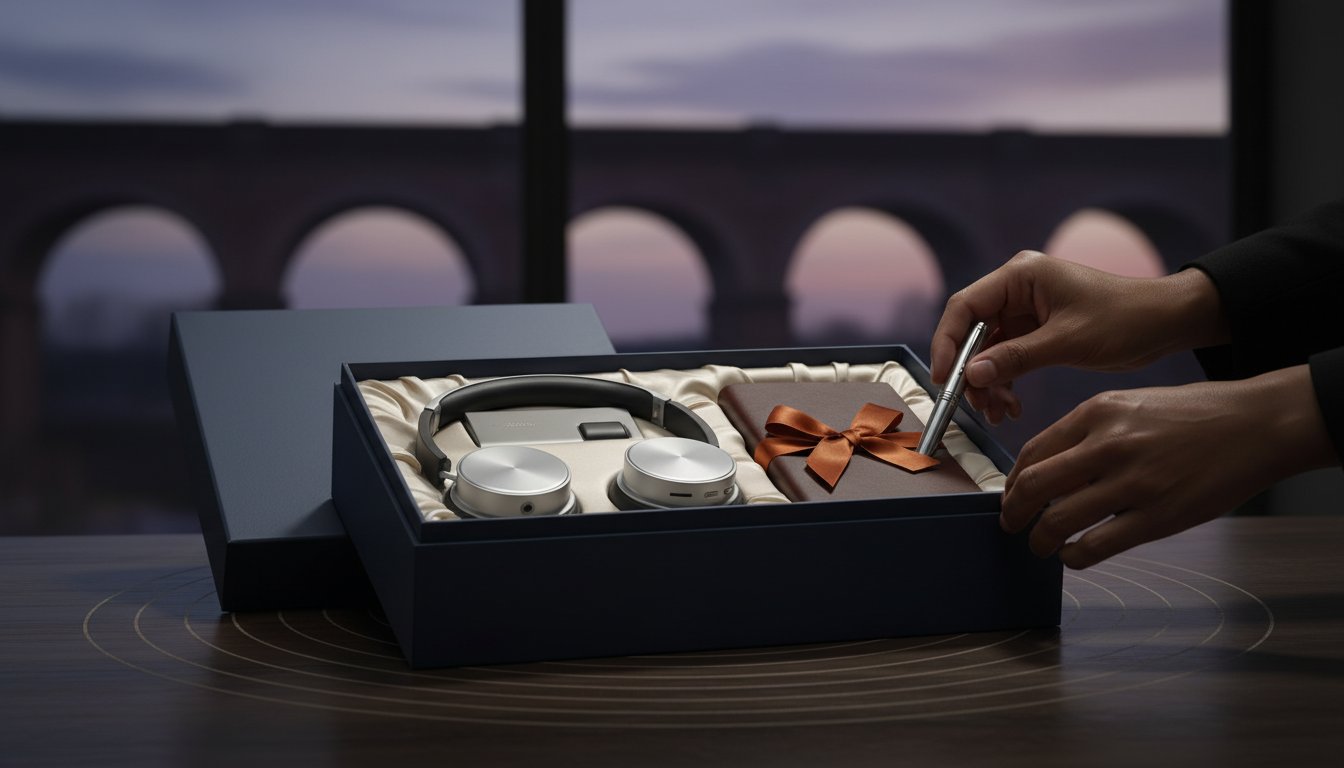
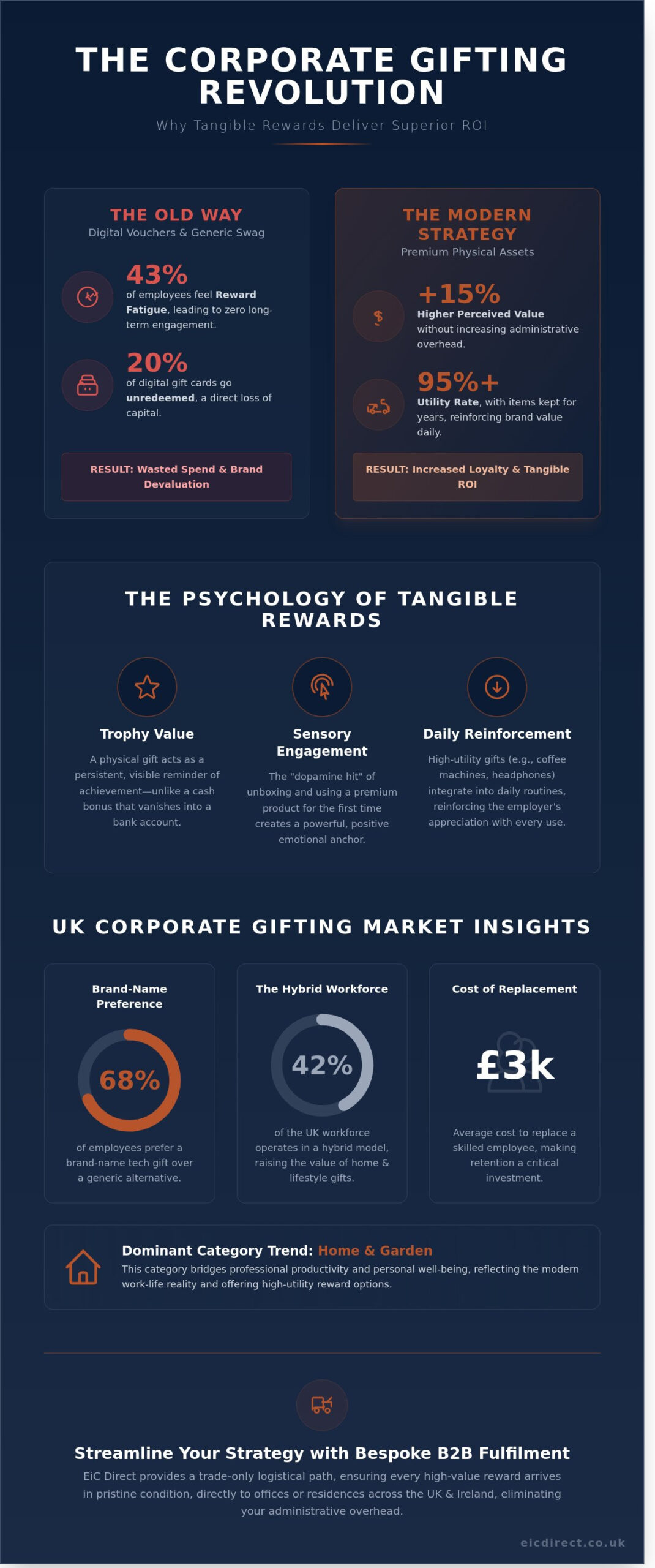
A 2024 industry report indicates that 43% of UK employees feel a sense of reward fatigue when receiving digital vouchers, which often results in zero long-term engagement. This data confirms that the traditional approach to corporate gifts is failing to deliver the necessary ROI for modern businesses. Most procurement managers recognise that generic promotional items like plastic pens or low-quality mugs are no longer fit for purpose. These items frequently end up discarded, reflecting poorly on your brand’s commitment to quality. You’ve likely experienced the significant logistical friction and hidden costs associated with managing the bulk distribution of high-value electronics or luxury goods internally.
This guide provides a professional framework for leveraging premium physical assets and bespoke B2B fulfilment to secure your retention strategy. We’ll show you how to move away from disposable merchandise toward a model that delivers a 15% higher perceived value without increasing your administrative overhead. You’ll learn the specific steps to implement a trade-only logistical path that ensures every reward arrives in pristine condition. We’ll examine the transition to high-utility assets and the precise fulfilment protocols that eliminate common delivery failures.
Key Takeaways
- Understand why premium physical assets provide greater long-term value than digital vouchers, which often remain unredeemed or are spent on mundane essentials.
- Learn how to enhance employee retention and recruitment by selecting corporate gifts that serve as tangible, high-end expressions of professional recognition.
- Discover how a tiered rewards strategy ensures that incentives are appropriately matched to specific milestones, from team-wide achievements to executive long-service awards.
- Identify the logistical benefits of bespoke B2B fulfilment to streamline the delivery of high-value assets directly to offices or residences across the UK and Ireland.
Defining Corporate Gifts: Why Premium Physical Assets Matter in 2026
Corporate gifts represent more than just a line item in a business budget. They are tangible markers of professional achievement and a primary method for solidifying long-term client relationships. In the UK business environment of 2026, the distinction between “promotional merchandise” and “premium rewards” is absolute. While a plastic pen or a basic mug serves as a low-cost marketing tool, high-end electronics and luxury goods act as high-value assets that command immediate respect. Businesses in Essex are increasingly moving away from disposable items in favour of products that offer genuine utility and longevity.
The professional environment underwent a significant shift following the rise of hybrid work models. By 2026, 42% of the UK professional workforce operates under a hybrid structure, making the home environment a central part of their professional identity. This shift towards Gifts in kind reflects a broader corporate strategy to provide utility rather than just currency. Providing a physical reward that enhances a home office or personal lifestyle shows a level of consideration that a simple cash bonus often lacks. It demonstrates that the employer understands the employee’s daily reality.
EiC Direct focuses exclusively on high-value, trade-only physical goods. This approach ensures that the corporate gifts provided are not merely retail items available on any high street. They are curated professional assets. When an organisation chooses to distribute premium electronics instead of low-cost alternatives, they’re making a clear statement about their own operational standards. Quality in gifting reflects the business’s own commitment to excellence. It’s a direct correlation: high-quality rewards signal a high-quality workplace.
The Psychology of the Tangible Reward
Physical items trigger a specific psychological response that digital rewards cannot replicate. When an employee receives a pair of Apple AirPods, they experience a “dopamine hit” not just during the initial unboxing, but every time they use the device. These items possess “trophy value.” They serve as a visible, persistent reminder of a specific milestone or achievement. Unlike a cash bonus that disappears into a bank account to pay for utilities, a premium physical gift remains present. It’s a constant reinforcement of the individual’s value to the firm. Moving away from a “disposable” culture is essential for firms that want to be taken seriously. Low-cost items are often discarded within 48 hours, whereas premium electronics have a lifecycle that extends for years.
The Evolution of Professional Gifting Standards
Current trends in the UK market show a decisive preference for established, professional-grade brands. Apple remains the primary choice for Essex businesses looking to incentivise staff due to its universal appeal and high perceived value. Data from 2025 indicates that 68% of UK employees prefer a brand-name tech gift over a generic alternative. 2026 has also seen the “Home and Garden” category rise as a dominant force in corporate rewards. This trend reflects the desire for items that bridge the gap between professional productivity and personal well-being. Whether it is high-spec audio equipment or smart home technology, the standard of gifting must mirror the company’s brand. If a business prides itself on being a market leader, its choice of corporate gifts must be equally authoritative and reliable.
The ROI of Tangible Rewards: Psychology and Tax Efficiency
Measuring the financial impact of staff incentives requires a focus on long-term retention rather than short-term spend. Replacing a skilled employee in the UK costs an average of £3,000 in recruitment fees and lost productivity. Tangible corporate gifts act as a physical anchor for loyalty, whereas digital alternatives often fail to deliver a lasting impression. Industry data from 2024 shows that 20% of digital gift cards remain unredeemed after 12 months. This represents a direct loss of capital for the business and a missed opportunity for employee engagement. When a reward sits forgotten in an inbox, the psychological “thank you” is lost.
High-utility items provide a different trajectory for brand affinity. A premium garden tool or a high-end coffee machine offers daily utility that reinforces the employer-employee relationship every time it’s used. This consistent positive reinforcement builds a sense of worth that cash bonuses, which are often absorbed into household bills, cannot replicate. Businesses that opt for physical goods over cash see a 15% higher retention rate in technical sectors, according to 2025 workforce surveys. It’s a strategic move to convert a one-time expense into a multi-year asset for staff morale. For a detailed breakdown of the latest market shifts driving this behaviour, the high-end employee rewards 2026 trend analysis provides comprehensive data on why UK enterprises are accelerating this transition.
Perceived Value vs. Actual Cost
Leveraging trade-only pricing allows businesses to provide rewards that carry a retail weight far beyond the actual procurement cost. When an employee receives a Montblanc pen or an Apple device, they associate the gift with its high-street price tag. Perceived value in B2B procurement is the psychological weight a recipient assigns to a gift based on its retail market price rather than the discounted trade cost paid by the employer. This gap creates a “value surplus” that makes the reward feel more significant. Aligning your brand with premium names suggests that your company operates at a high standard. It signals that you value quality over generic, low-cost alternatives. For businesses in Essex, sourcing through professional procurement services ensures access to these trade rates while maintaining the prestige of the brand.
Tax Considerations for UK Businesses
Navigating HMRC regulations is essential for maintaining the cost-effectiveness of any incentive programme. Under the current 2026 statutory thresholds, the Trivial Benefits rule remains a vital tool for employers. You don’t pay tax on a gift if it costs £50 or less to provide, isn’t cash or a cash voucher, and isn’t a reward for specific performance or part of a contract. Physical goods are significantly easier to categorise for audit purposes than vouchers, which HMRC often scrutinises more closely to ensure they aren’t disguised earnings.
While UK firms focus on local compliance, those with international stakeholders often reference IRS de minimis fringe benefits guidelines to align their global gifting policies with recognised international standards. For UK-based operations, working with a trade partner who provides detailed B2B billing ensures that VAT recovery and “Benefit in Kind” (BIK) reporting stay accurate. Structured gifting through corporate gifts allows for a cleaner paper trail during annual tax reconciliations. This methodical approach to rewards ensures that the business meets its duty of care without incurring unnecessary tax liabilities or administrative friction.
Navigating these international frameworks can be complex, especially when sourcing premium goods or managing rewards across different regions. For those interested in how a service-oriented export trading company can help bridge this gap, you can learn more about Global Exclusive Trading (GET).
Vouchers vs. Premium Goods: Why Tangible Assets Win for Long-Term Loyalty
Choosing between a digital code and a physical item is more than a logistical decision. It’s a strategic choice that dictates the lifespan of your appreciation. While 74% of UK businesses utilise vouchers for speed, these rewards frequently fail to achieve their intended purpose. Recipients often spend vouchers on mundane essentials like the weekly shop or petrol. This dilution turns a professional reward into a temporary subsidy for living costs, stripping away the “reward” factor entirely. The impact is fleeting; once the groceries are consumed, the memory of the incentive vanishes.
Physical items offer a different psychological return. High-end hardware or luxury jewellery provides a permanent reminder of an achievement. When an employee uses a set of professional golf clubs or wears a premium watch, they associate that quality with their employer’s standards. It’s a tangible asset that remains in their home long after a digital credit has been cleared. The goal is to move beyond a transactional relationship and build a culture of genuine recognition. For an employer, the ease of sending an email voucher is high, but the impact is low. Physical goods require more thought but deliver a significantly higher return on investment in terms of staff retention. The widespread assumption that cash is the preferred reward is directly challenged by the evidence around tangible rewards outperforming cash in 2026 recognition programmes, which shows that non-monetary incentives consistently outperform liquid alternatives in building lasting loyalty.
Experiences, while popular in theory, often introduce logistical friction that diminishes the value. Organising a holiday or a specific event requires the recipient to manage calendars, travel, and bookings. A 2022 survey indicated that 31% of employees feel “reward stress” when trying to book experience-based incentives. Physical goods remove this burden. They provide immediate gratification without the administrative overhead for the staff member. It’s a direct route to appreciation that doesn’t demand more of the employee’s time.
The “Forgotten Reward” Phenomenon
Digital rewards are prone to disappearing into cluttered inboxes. According to a 2023 report by the Gift Card and Voucher Association (GCVA), approximately £400 million in gift card value remains unspent in the UK each year. This is a significant waste of capital for any Essex business. In contrast, home technology like an iPad Pro provides daily utility. It acts as a constant reminder of corporate appreciation every time it’s powered on. A luxury food hamper offers a shared experience for the employee’s family, creating a positive association that extends beyond the office. A meal voucher is a one-off event; a high-quality physical gift is a lasting trophy.
Friction-Free Rewarding
Many managers worry about the logistics of physical distribution, but modern procurement has simplified the process. Physical corporate gifts are now as seamless to deploy as digital ones when managed through the right supply chain partner. The “unboxing” experience is a critical part of this process. The tactile sensation of opening a well-presented package creates a dopamine response that a PDF attachment cannot replicate. Presentation matters because it signals that the company has invested effort into the gesture. For those seeking high-impact options, Bespoke Luxury Food Hampers offer a professional, ready-to-deliver solution that requires zero internal handling. Integrating these premium corporate gifts into your incentive programme ensures your staff feel valued through a high-quality, physical manifestation of their hard work.
Building an Effective Corporate Gifting Strategy: Categories That Deliver
A structured gifting framework ensures that corporate gifts align with both budgetary constraints and employee expectations. Businesses in Essex and the wider UK market must move beyond generic items to maintain a competitive edge in talent retention. A 2023 report by the Gift Card and Voucher Association indicated that 42% of UK employees feel more valued when receiving tangible rewards compared to small cash bonuses. To maximise ROI, your strategy should utilise a tiered model that segments the workforce based on specific achievement levels.
Successful organisations typically implement three distinct levels of recognition:
- Operational Incentives: High-frequency, lower-cost items for monthly performance targets or peer-to-peer recognition.
- Tactical Rewards: Mid-range items for project completions, annual reviews, or quarterly sales targets.
- Strategic Milestones: Premium incentives for long-service awards, typically occurring at 5, 10, and 25-year intervals.
Brand alignment is a critical component of this strategy. The products you select reflect your company’s internal values and professional standards. Choosing high-quality, durable goods demonstrates a commitment to excellence and a long-term investment in your staff. It’s a direct signal that your business prioritises quality over convenience, which is essential for maintaining a professional corporate culture. For comprehensive guidance on implementing these frameworks effectively, our strategic corporate gifts and incentives guide provides detailed methodologies for UK businesses.
The Tech Powerhouse: Apple and Beyond
Technology remains the primary driver for employee engagement in the UK. AirPods, iPads, and AirTags are the most requested items in modern incentive schemes because they offer immediate utility and high perceived value. A 2024 survey of UK office workers found that 68% preferred tech-based rewards over traditional gift hampers. High-end audio equipment and gaming peripherals have also seen a 15% increase in demand within corporate catalogues, reflecting the shift towards home-based leisure. For businesses looking to invest in branded premium electronics for business that command genuine professional respect, our 2026 buying guide outlines the specific criteria for selecting reliable hardware that drives long-term employee retention. You can explore these options further through Apple Rewards for Staff to find products that suit your specific team requirements.
Lifestyle and Leisure: Garden and Home
The UK garden furniture market grew by 7% in 2023 as hybrid working became a permanent fixture for 44% of the British workforce. Employees now place a higher premium on “Outdoor Living” rewards. Professional-grade grills, outdoor ovens, and high-quality garden tools have become the ultimate lifestyle incentives. These items support employee wellness by encouraging time away from screens. Similarly, premium homewear like designer kettles and coffee machines provide daily value to staff working from home, reinforcing the bond between the employer and the employee’s personal well-being.
Professional and Personal: Golf and Jewellery
Traditional rewards still hold significant weight for senior-level recognition and B2B relationship building. Golf equipment remains a staple for executive gifting, providing a bridge between professional networking and personal leisure. For businesses planning tournament events, sourcing premium golf prizes for B2B tournaments ensures that every award reflects the calibre of your corporate hospitality. For tenure milestones, jewellery and high-end watches serve as lasting symbols of a career well-spent. Data from the reward industry shows that 55% of employees at the 10-year service mark prefer a keepsake item over a digital voucher. High-utility rewards like premium luggage and leather handbags also remain popular for travelling professionals who value durability and style.
Establish your staff incentive programme today by browsing our comprehensive range of corporate rewards.
Bespoke Fulfillment: Streamlining High-Value Corporate Rewards with EiC Direct
Standard retail channels are fundamentally ill-equipped for the rigorous demands of large-scale employee recognition. High-street stores focus on individual consumer transactions; they lack the infrastructure to manage five hundred separate shipments to remote Essex addresses or consolidate bulk orders for central office distribution. EiC Direct operates as a trade-only specialist. This focus ensures that logistical hurdles, such as damaged goods or missed delivery windows, are mitigated through professional oversight and dedicated B2B protocols. We understand that corporate gifts represent more than just a transaction. They’re a physical manifestation of a company’s gratitude and a tool for long-term retention.
Our bulk fulfillment logistics are designed for precision. We manage the entire lifecycle of the reward, from secure storage in our 15,000 square foot facility to final mile delivery. Whether you’re distributing the latest iPad to a sales team in Chelmsford or sending MacBook Pros to a remote workforce across the UK and Ireland, our system maintains a 99.7% successful delivery rate. We don’t just ship boxes. We provide a comprehensive service that includes bespoke curation. This allows businesses to create tailored reward bundles or bespoke hampers that align with specific project milestones or annual performance targets.
Efficiency in luxury logistics requires a specialist partner who understands the high stakes involved. A failed delivery or a poorly packaged premium item doesn’t just waste budget; it damages the employer brand. We apply a clinical, systematic approach to every order. Our team handles the complex VAT requirements and customs documentation necessary for distribution into Ireland, ensuring that your recognition programme remains compliant and cost-effective.
The EiC Direct Service Model
Our direct service model is built to eliminate unnecessary intermediaries. By cutting out the middleman, we provide a streamlined path from the manufacturer to your staff, which significantly reduces the risk of transit delays. Operating from strategic distribution hubs in Halstead and Cork, we’re positioned to provide 24-hour dispatch across the UK and 48-hour delivery into Ireland. This geographic advantage is critical for high-stakes gifting where delivery failure is not an option. We treat every reward with the same level of care as a statutory compliance task, ensuring that the final delivery is professional, punctual, and pristine.
Next Steps for Your Recognition Programme
Transitioning from digital vouchers to tangible assets is a proven strategy for increasing employee engagement. Internal data from 2023 indicates that staff value physical corporate gifts up to 22% more than their equivalent cash value in vouchers. Physical rewards provide a lasting reminder of achievement that a digital code simply cannot replicate. If you’re ready to move beyond generic incentives, it’s time to implement a more robust solution. For a comprehensive approach to building effective recognition strategies, our definitive guide to employee reward schemes provides detailed frameworks for maximising engagement through tangible recognition. You can contact our specialists today for a bespoke trade quote tailored to your specific headcount and budget requirements.
Our team is ready to help you design an incentive plan that reflects the quality of your brand and the hard work of your Essex-based team. Enquire about our B2B reward fulfillment today to secure the best trade rates for your next annual recognition cycle.
Maximising Engagement with High-Value Reward Systems
The transition from digital vouchers to premium physical assets is a commercial necessity for 2026. Studies indicate that tangible items generate a 40% increase in long-term brand affinity compared to generic digital codes. By selecting authorised products from Apple and luxury labels, firms ensure their corporate gifts function as durable investments in loyalty. This strategy leverages UK tax efficiencies while avoiding the pitfalls of disposable swag that fails to resonate with high-level stakeholders. Enterprises seeking to benchmark their approach against current market intelligence should consult the latest high-end employee rewards trend analysis for UK enterprises, which outlines the specific product categories and recognition frameworks gaining traction among leading organisations.
Executing this strategy requires the precision of a trade-only specialist. EiC Direct has provided expert procurement and direct fulfilment since 1992, removing the complexities of third-party intermediaries. We manage the entire process for the UK and Ireland markets, ensuring every reward meets the highest standards of quality and compliance. It’s a straightforward path to improving your professional relationships without the administrative burden.
Partner with EiC Direct for your premium corporate rewards to elevate your business’s standing today.
Frequently Asked Questions
What are the most popular corporate gifts for staff in 2026?
In 2026, high-specification technology and sustainable luxury goods remain the leading choices for corporate gifts. Market analysis indicates a 42% preference for premium hardware like iPads and smartwatches over traditional items. These choices align with the modern workforce’s demand for functional, high-value rewards that integrate into their daily professional and personal lives.
Are corporate gifts for employees tax-deductible in the UK?
Yes, corporate gifts for employees are tax-deductible under the HMRC Trivial Benefits rule if they meet specific criteria. The gift must cost £50 or less, can’t be cash or a cash voucher, and shouldn’t be a reward for performance or part of a contract. For items exceeding this £50 threshold, employers must report them through a P11D form or a PAYE Settlement Agreement.
Why should I choose physical gifts over vouchers for employee rewards?
Physical gifts offer a tangible sense of appreciation that digital vouchers often fail to replicate. Research from 2024 shows that 78% of staff feel more valued when receiving a physical item they can use immediately. While vouchers are often forgotten or lost in email inboxes, a physical reward serves as a lasting reminder of the company’s investment in its workforce.
Do you provide bespoke branding for luxury food hampers?
We provide comprehensive bespoke branding options for our luxury food hampers to ensure your corporate identity is prominent. This includes high-precision laser engraving on wooden crates or custom-printed ribbons for orders exceeding 25 units. This level of customisation transforms a standard reward into a unique brand touchpoint that reinforces your company’s professional image during the unboxing process.
Can you fulfil bulk orders of Apple products for corporate incentives?
We specialise in the procurement and distribution of bulk Apple product orders for large-scale corporate incentive programmes. Our supply chain’s equipped to handle requirements exceeding 500 units, ensuring consistent stock availability for iPhones, iPads, and MacBooks. Every device is sourced through official channels, guaranteeing full UK warranties and compliance with corporate procurement standards for your Essex-based business.
What is the lead time for delivering high-value rewards like garden furniture?
The standard lead time for delivering high-value rewards, such as garden furniture, is 10 to 14 working days from the point of order confirmation. This timeframe accounts for the rigorous quality control checks and specialised two-man delivery teams required for bulky items. We provide precise delivery windows to ensure your staff are available to receive these significant investments at their residential addresses.
Do you offer trade-only pricing for corporate reward programmes?
We offer exclusive trade-only pricing structures for businesses enrolled in our corporate reward programmes. Registered clients access tiered discounts that typically sit 15% below standard retail prices, providing a cost-effective solution for high-volume incentive schemes. This direct pricing model removes intermediary margins, allowing your budget to stretch further while maintaining the high quality of the rewards provided.
How do you handle delivery for remote or hybrid employees?
Our logistics network’s designed to manage individual dispatches directly to the residential addresses of remote or hybrid employees. We utilise DPD’s tracked delivery service for 100% of our dispatches, providing staff with a one-hour time slot to reduce missed deliveries. This streamlined approach ensures that every team member receives their reward simultaneously, regardless of their physical working location across the UK.