
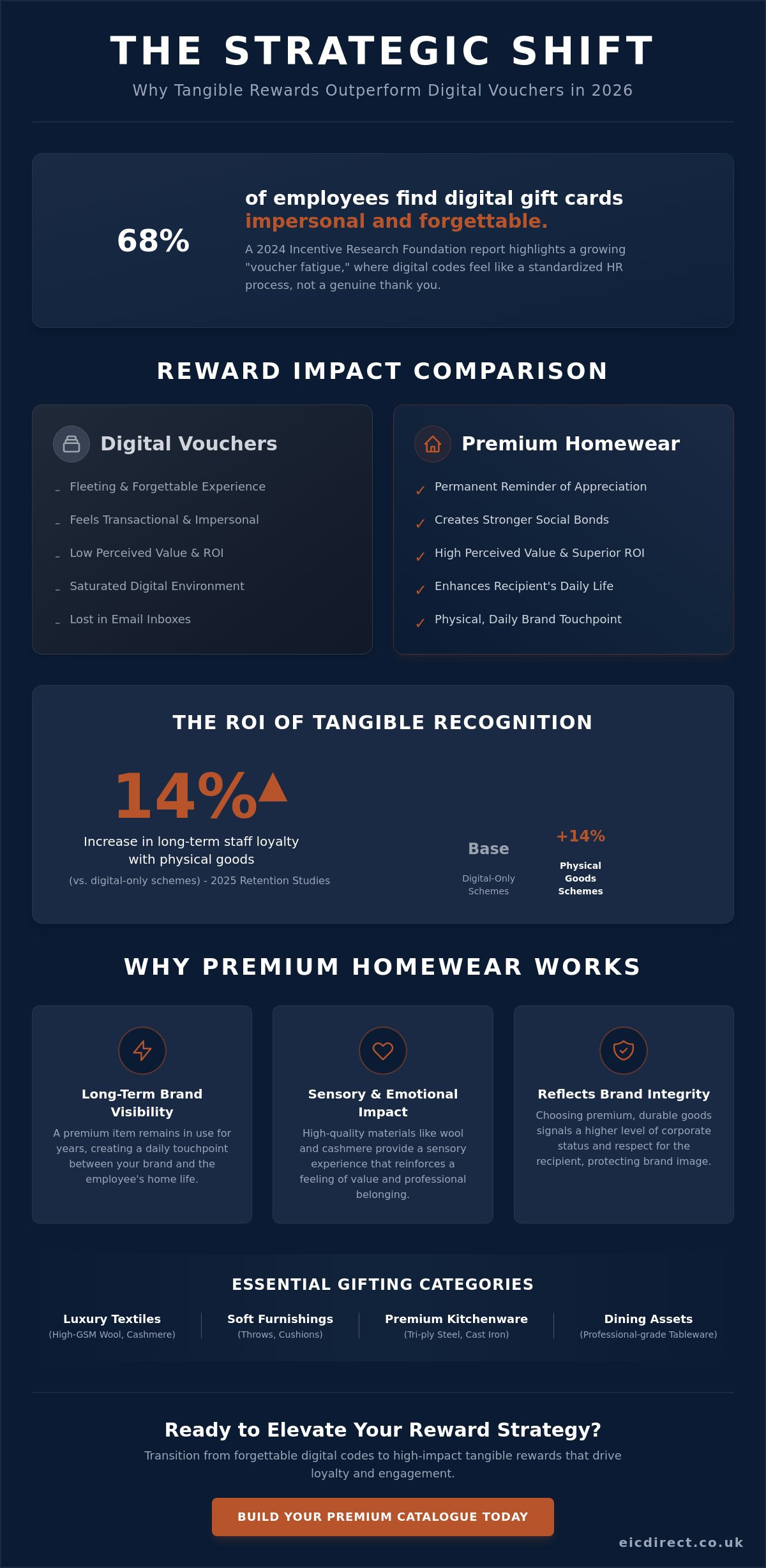
A 2024 industry report by the Incentive Research Foundation highlights that 68% of employees now find digital gift cards impersonal and forgettable. You likely recognise that a standard email voucher does little to bridge the gap between your corporate brand and a remote worker’s daily living space. Integrating high-quality homewear & furnishings into your reward strategy provides a tangible, long-term touchpoint that digital codes cannot replicate.
It’s clear that maintaining team cohesion in a distributed workforce requires more than just a functional salary. It demands a physical presence that reflects your company’s commitment to excellence. This guide demonstrates how to leverage premium homewear and furnishings as strategic corporate incentives to drive employee engagement and client loyalty through 2026. We’ll examine the logistical framework for sourcing at scale and the specific procurement steps needed to ensure your rewards project the absolute quality your brand represents.
Key Takeaways
- Analyse the strategic transition from digital vouchers to tangible rewards as a method to combat incentive fatigue in the 2026 corporate landscape.
- Identify the essential categories of homewear & furnishings required to curate a reward catalogue that reflects professional standards and personal utility.
- Evaluate the technical requirements of sourcing trade-grade items to ensure reward durability and protect corporate brand integrity.
- Implement a structured recognition framework that tiers high-end domestic incentives against key performance milestones and long-service achievements.
- Discover the operational efficiencies of professional trade partnerships for managing scalable inventory and streamlined reward distribution.
The Strategic Shift: Why Homewear & Furnishings Outperform Digital Vouchers
By 2026, the corporate incentive landscape has moved decisively away from intangible digital codes. Companies now prioritise high-impact physical items to drive engagement. This shift responds to a saturated digital environment where email-delivered codes often go unredeemed or feel purely transactional. The history of gift-giving demonstrates that physical tokens create stronger social bonds than abstract promises of value. High-quality homewear & furnishings serve as a permanent reminder of an employer’s appreciation. Transitioning from low-cost promotional items to premium home goods signals a higher level of corporate status and respect for the recipient.
Combating Voucher Fatigue in Remote Teams
Digital rewards often lack personal resonance. In a 2024 industry survey, 68% of UK employees stated that digital vouchers felt like a standardised HR process rather than a genuine thank you. The blending of home and office environments has fundamentally altered reward preferences. Staff now seek items that enhance their domestic space. Evidence from 2025 retention studies shows that organisations utilising physical goods see a 14% increase in long-term staff loyalty compared to those using digital-only schemes. Choosing tangible rewards over generic swag demonstrates a commitment to quality that aligns with professional standards.
The ROI of Tangible Recognition
The longevity of physical items provides a superior return on investment. A premium wool throw or a high-end kitchen accessory remains in use for years, whereas a digital experience is fleeting. This creates a daily touchpoint between the brand and the employee’s domestic life. Sensory gifting is the use of physical textures and aesthetics to reinforce professional belonging. Unlike a one-off meal or a digital credit, homewear & furnishings provide visible, long-term evidence of status within an organisation. It’s a methodical approach to loyalty that mirrors the systematic nature of professional asset management.
Consider the operational efficiency of physical gifting. It removes the friction of digital redemption and provides a concrete asset that holds value. Businesses that invest in these items are building a culture of permanence. This approach reduces the disposable feel of modern employment contracts. It establishes a sense of clinical efficiency in how a company handles its duty of care toward staff morale. By 2026, the most successful UK firms have recognised that a physical presence in the home is the most effective way to maintain brand visibility and employee satisfaction.
Defining Premium Homewear: Essential Categories for Corporate Gifting
Effective corporate gifting requires a balance between professional utility and domestic comfort. Curating a catalog of homewear & furnishings involves selecting items that respect personal boundaries while offering tangible value. A 2023 study by the British Promotional Merchandise Association (BPMA) indicated that 72% of recipients value gift quality over brand visibility. Successful strategies focus on high-utility items that enhance the home environment without imposing a specific aesthetic; for inspiration on design-led pieces that meet these standards, you can check out Red Tree Furniture. This approach ensures the reward feels like a genuine benefit rather than a promotional exercise.
Luxury Textiles and Soft Furnishings
Sourcing textiles requires a focus on material integrity. We recommend high-GSM (Grams per Square Metre) wool, organic cotton, and Grade A cashmere. These materials provide a sensory experience that standard retail options lack. Neutral palettes, such as slate, taupe, or charcoal, ensure suitability for approximately 95% of UK home decors. Soft furnishings represent the most efficient category for bulk fulfillment because they don’t require complex sizing or electrical testing. This simplifies logistics for large-scale reward programmes while maintaining a high perceived value.
Premium Kitchen and Dining Assets
The UK has seen a 14% increase in “hosting culture” since 2022, driving demand for premium tableware. Businesses should evaluate professional-grade cookware, such as tri-ply stainless steel or cast iron, which offers superior heat distribution compared to standard consumer alternatives. These assets provide long-term brand association through daily use. For a comprehensive experience, businesses can integrate these hardware rewards with bespoke luxury food hampers. This creates a multi-sensory reward that combines utility with immediate enjoyment.
Integrating technology into a reward strategy requires a focus on design-led appliances. Kettles and toasters from brands with established engineering credentials offer both aesthetic appeal and reliability. Smart home tools, such as energy-monitoring plugs or high-fidelity speakers, align with modern sustainability goals. These items must meet all UK safety standards to ensure corporate liability is managed effectively. Companies looking to streamline their procurement should consider a direct service model to reduce lead times and ensure total compliance across their gifting inventory.
Evaluating Quality: How Furnishings Reflect Your Brand Integrity
Sourcing retail-grade products is no longer sufficient for high-stakes corporate recognition programs. In the 2026 B2B landscape, the distinction between a generic gift and a premium reward lies in technical excellence and longevity. When a business provides a reward that malfunctions or degrades quickly, it sends a message of negligence rather than appreciation. High-quality homewear & furnishings serve as a tangible extension of your brand’s commitment to excellence. Durability ensures that the reward remains a functional part of the recipient’s life for years, preventing the brand damage associated with low-quality failures.
Positioning premium items as a “Duty of Care” initiative is a strategic move for modern HR and facility managers. As the boundaries between professional and domestic spaces remain fluid, providing high-specification home equipment supports employee well-being and productivity. For example, forward-thinking firms might explore I-Easy dual motors Electric Standing Desk as a cornerstone of an ergonomic home-office reward. This approach treats the employee’s home environment with the same rigour as a managed office space, moving the conversation from simple gifting to a serious investment in human capital and operational safety.
Brand Association and Perception
The quality of a gift correlates directly with the perceived value of the employee. Selecting high-end items prevents the promotional item trap. Mugs, plastic pens, and cheap branded goods are prohibited in premium programs because they lack utility and prestige. Data from industry surveys in 2025 indicates that 72% of senior professionals associate low-quality corporate gifts with a lack of corporate vision. Leaders must select brands that align with corporate ESG goals. This includes verifying sustainable manufacturing processes and ethical labour practices to ensure the reward reflects the firm’s moral standing.
Compliance and Safety Standards
Safety is the foundation of any professional procurement process. All electrical homewear & furnishings must meet current UK safety certifications, including BS 1363 for plug and socket safety. Failure to verify these standards introduces unnecessary liability into the corporate structure. Soft furnishings must adhere to the Furniture and Furnishings (Fire Safety) Regulations 1988, specifically meeting BS 7176 standards for fire retardancy. Statutory compliance in gifting is as vital as in operational equipment. This methodical approach to safety ensures peace of mind for the business owner and the recipient alike. Utilizing a direct service model for procurement eliminates the risks associated with unverified third-party resellers. It guarantees that every item delivered meets the stringent requirements of UK health and safety legislation.
Implementation: Integrating Homewear into Your Recognition Framework
Deploying a rewards strategy requires more than just high-quality products. It demands a systematic approach that aligns with corporate objectives and operational workflows. To ensure homewear & furnishings provide a return on investment, businesses must identify specific triggers for distribution. Common milestones include long-service awards at the 5, 10, and 20-year marks, or the successful completion of major capital projects. Seasonal bonuses, particularly in December, also serve as high-impact moments for home-centric gifting. Efficiency is maintained by using employee recognition programs to automate these workflows. This reduces the administrative burden on HR departments and ensures that no milestone is overlooked. Automation also provides a clear audit trail for tax compliance, which is vital for P11D reporting in the UK.
Tiering Your Reward Catalog
Effective recognition requires a clear hierarchy of value. A structured catalog prevents budget overruns and ensures rewards are proportionate to the achievement. It’s essential to maintain a hierarchy that reflects the level of effort involved. We recommend three distinct tiers:
- Entry-level (£25–£75): Focus on luxury kitchen accessories, high-end scented candles, or premium glassware. These items provide immediate utility and a touch of luxury for monthly performance targets.
- Mid-tier (£150–£300): This level typically includes premium Egyptian cotton bedding sets, designer soft furnishings like wool throws, or high-quality cookware. These are suitable for annual awards or mid-level project completions.
- Executive (£500+): Reserved for 25-year service milestones or major leadership achievements. This tier includes high-value assets such as small kitchen appliances or durable garden furniture sets that enhance the recipient’s living environment for years. For outdoor-focused recipients, premium corporate BBQ gifts represent a compelling executive-tier option that integrates seamlessly into lifestyle-led reward programmes.
The Power of Choice in Gifting
Personal taste is subjective. A reward that suits one employee’s home might not fit another’s aesthetic. Providing a choice-based portal allows staff to select homewear & furnishings that match their personal style. This increases the perceived value of the gift. Data from the Incentive Research Foundation in 2023 indicates that 80% of employees feel more valued when they can choose their own reward. Self-selection also eliminates the risk of wasted spend on unwanted items. From a logistical standpoint, these platforms simplify national distribution. Employees enter their own delivery details directly into the portal. This reduces errors and ensures that large items, like furniture, are shipped directly to the correct address without the need for intermediary storage or handling by the employer.
Effective implementation turns a simple gift into a strategic asset. Businesses that follow a structured, tiered, and choice-driven model see higher engagement levels and better long-term retention. To start building your bespoke reward strategy, contact our corporate rewards team for a consultation.
Scalable Fulfillment: Sourcing Homewear Through a Professional Trade Partner
Transitioning from retail purchasing to prize fulfilment services represents a shift from reactive buying to strategic asset management. Consumer retail platforms aren’t built for the complexities of corporate reward schemes. They lack the infrastructure to handle high-volume distribution or the specific administrative needs of a procurement department. By partnering with a trade specialist, businesses eliminate the logistical burden of managing homewear & furnishings internally. This removes the requirement for dedicated warehouse space or the risk of holding depreciating stock on-site.
Operational flexibility is critical for 2026 incentive programs. Many traditional suppliers demand high Minimum Order Quantities (MOQs), which can stifle bespoke recognition initiatives or small-scale pilot programs. A professional trade partner provides a “No MOQ” model. It allows for the delivery of a single premium item, such as a high-end espresso machine or a designer wool throw, with the same efficiency as a bulk order of 500 units. This scalability ensures that rewards remain personal and targeted without incurring the overheads usually associated with low-volume orders.
The B2B Trade-Only Advantage
Trade-only access opens doors to premium brands that protect their market equity by avoiding mass-market retail channels. Procurement teams benefit from streamlined invoicing and dedicated account management, which simplifies VAT reporting and budgetary tracking. Direct sourcing models remove unnecessary layers from the supply chain. This ensures that a higher percentage of the corporate budget is spent on the physical quality of the homewear & furnishings rather than paying for middleman margins. It’s a pragmatic approach to securing high-perceived-value items at a sustainable cost. Expanding your catalogue to include high-end outdoor hardware and corporate BBQ gifts through a trade partner further broadens your reward offering without adding procurement complexity.
National Logistics and Distribution
Shipping fragile kitchenware or bulky furniture requires specialized handling that standard couriers often fail to provide. Professional logistics providers implement rigorous packing standards to ensure items arrive in pristine condition. Real-time tracking data provides HR managers with 100% visibility over the delivery lifecycle. This protects the “unboxing experience,” ensuring the recipient’s first physical interaction with the reward reflects the company’s professional standards. Effective “Last Mile” delivery across the UK ensures that whether a reward is sent to a central office in London or a remote home worker in the Scottish Highlands, the service remains consistent, reliable, and secure.
Elevate Your Corporate Incentive Framework
Shifting your strategy toward tangible assets ensures your recognition program delivers measurable impact throughout 2026. Premium homewear & furnishings offer a level of permanence and perceived value that digital alternatives lack. When you provide high-specification items from luxury home brands or premium Apple electronics, you’re directly investing in your brand’s integrity. EIC Direct facilitates this transition with over 30 years of specialist B2B fulfillment expertise. We understand that operational clarity is vital for business owners and procurement managers who require seamless logistics. Our direct service model eliminates the complexity of inventory management by offering no minimum order quantities. This ensures your reward scaling remains cost-effective and flexible, regardless of your department’s size or specific requirements. It’s a direct, professional approach to corporate gifting that prioritizes reliability and quality.
Explore our trade-only homewear and furnishings catalog for your next incentive program. We look forward to supporting your business goals with dependable fulfillment solutions.
Frequently Asked Questions
Is homewear a suitable gift for male and female employees?
Yes, premium homewear is a gender-neutral reward that appeals to all demographics within a professional workforce. You should focus on high-quality materials like 400-thread-count Egyptian cotton or merino wool throws. These items offer universal utility. By selecting neutral colour palettes such as charcoal, stone, or navy, companies ensure the rewards fit any personal preference while maintaining a sophisticated corporate image.
How do I choose furnishings that fit different home styles?
Select minimalist or “Scandi” style furnishings to ensure compatibility with diverse interior designs. These styles use clean lines and neutral tones that integrate into 90% of modern UK households. Don’t choose overly ornate or niche aesthetic pieces that might clash with an employee’s existing decor. Focus on functional items like high-quality lamps or modular storage solutions that offer practical value regardless of the recipient’s architectural home style.
What are the tax implications of giving homewear as a reward?
Under current HMRC guidelines, rewards are often classified as Trivial Benefits if they cost £50 or less, including VAT. If the value exceeds this threshold, the employer must report it via a P11D form or handle the liability through a PAYE Settlement Agreement (PSA). This ensures the employee doesn’t incur a personal tax charge. Employers should consult the Income Tax (Earnings and Pensions) Act 2003 to ensure full statutory compliance.
Can homewear and furnishings be branded with a company logo?
Companies can brand homewear & furnishings using techniques like tonal embroidery, discreet woven labels, or laser engraving on wooden elements. We recommend subtle placement to preserve the item’s premium aesthetic and ensure long-term use in the home. High-visibility logos can sometimes reduce the perceived value of a luxury gift. Maintaining a balance between brand presence and design integrity is essential for successful corporate gifting programmes.
How do I manage the delivery of large furniture items to employees?
Manage large item deliveries through a professional two-man “white-glove” service to ensure safe arrival and assembly. This service model includes room-of-choice delivery and removal of all packaging materials, which is a requirement for 85% of high-end furniture recipients. Clear communication through SMS tracking and pre-allocated delivery windows reduces failed delivery attempts. This systematic approach protects the company’s investment and provides a seamless experience for the employee.
Why should I choose physical homewear over a digital gift card?
Physical homewear & furnishings provide a lasting “endowment effect” that digital gift cards fail to replicate. Research indicates that tangible gifts are remembered 75% longer than digital credits. A physical item serves as a constant reminder of corporate appreciation within the employee’s living space. This creates a stronger emotional connection to the brand compared to a one-off digital transaction that’s often forgotten once the balance is spent.
What is the typical lead time for bulk homewear orders?
Typical lead times for bulk corporate orders range from 6 to 10 weeks depending on the level of customisation required. Standard stock items might be available within 14 days, but bespoke branding adds time to the production schedule. You should finalise your 2026 reward strategy at least 3 months before the intended distribution date. This buffer accounts for quality control inspections and logistical coordination across UK distribution networks.
Are there eco-friendly homewear options for corporate programs?
There’s a wide range of sustainable options including GOTS-certified organic cotton, recycled polyester fillings, and FSC-certified timber furnishings. The UK’s Green Claims Code, updated in 2024, requires businesses to provide evidence for environmental assertions. We ensure all eco-friendly rewards meet these statutory requirements. Choosing sustainable materials demonstrates a company’s commitment to ESG goals and resonates with the 67% of UK employees who prefer working for environmentally conscious firms.