

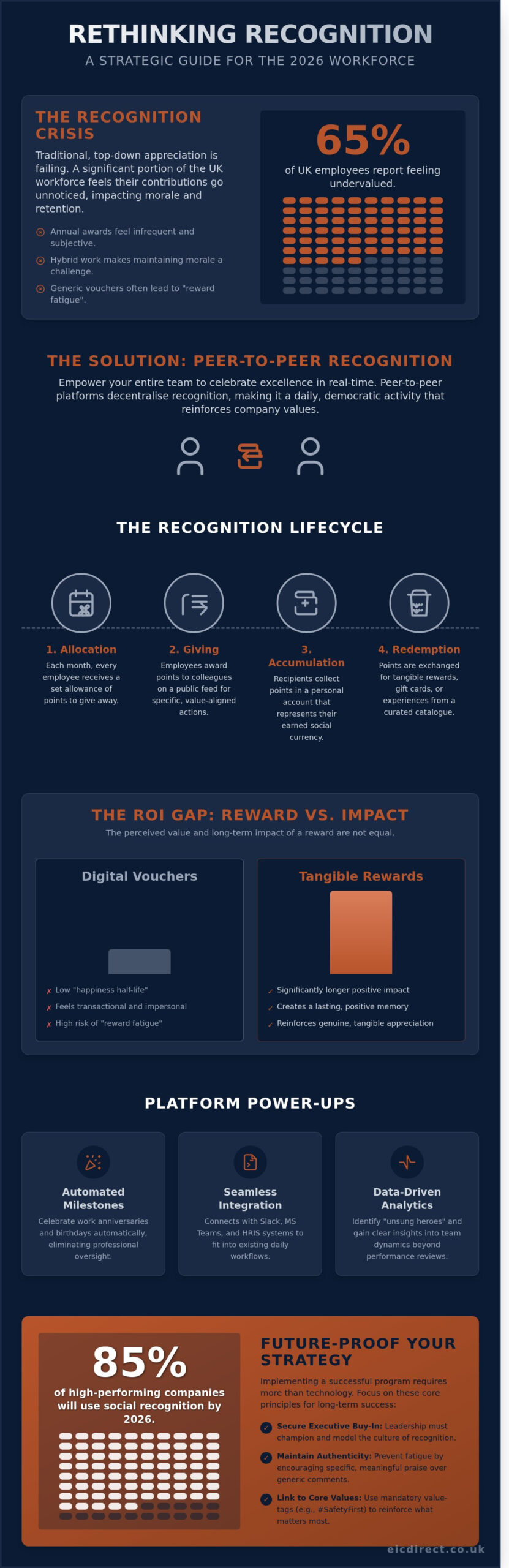
A staggering 65% of UK employees report feeling undervalued, proving that the traditional annual award ceremony is no longer a viable strategy for staff retention. For many business owners, the shift to hybrid working has only exacerbated this issue, leaving managers struggling to maintain morale across distributed teams. You likely recognise that generic digital vouchers often lead to reward fatigue, where the gesture feels more like a box-ticking exercise than genuine appreciation. It’s clear that a more dynamic, peer-led approach is required to meet the operational demands of the 2026 workforce.
This guide demonstrates how peer-to-peer platforms such as bonusly can transform your workplace culture by decentralising the recognition process. We’ll show you why the tangible quality of the reward is the primary factor in determining your long-term ROI and how to implement a system that runs with clinical efficiency. You’ll discover a streamlined path to improving staff morale through high-quality rewards and a structured framework for maintaining professional standards in your HR operations.
Key Takeaways
- Understand the operational mechanism of peer-to-peer recognition and how monthly point allowances empower staff to acknowledge excellence in real-time.
- Discover how platforms such as bonusly foster a culture of appreciation by decentralising the recognition process and aligning it with core company values.
- Evaluate the “ROI gap” between transactional digital vouchers and tangible rewards, which provide a significantly longer happiness half-life for UK employees.
- Learn essential implementation strategies for 2026, including how to secure executive buy-in and maintain authenticity to prevent recognition fatigue.
- Explore the strategic advantages of premium reward fulfilment and how trade-only suppliers provide access to high-end brands that standard catalogues lack.
What is Bonusly? Understanding Peer-to-Peer Recognition
Bonusly is a digital employee recognition and rewards platform that decentralises appreciation within an organisation. Rather than relying on top-down feedback, the system facilitates a culture of peer-to-peer “shout-outs”. Every employee receives a monthly allowance of points. They must distribute these points to colleagues to acknowledge specific contributions or values-aligned behaviours. These points hold tangible value, as they are redeemable for gift cards, charity donations, or bespoke company rewards.
Traditional “Employee of the Month” schemes often fail because they’re infrequent and subjective. A 2023 Gallup report found that only 26% of employees feel their recognition is equitable when managed solely by leadership. This platform addresses the issue by making recognition a daily, democratic activity. Every contribution is logged on a public feed. This visibility ensures that quiet, consistent effort doesn’t go unnoticed by the wider business. It transforms individual achievements into collective wins, ensuring that hard work is documented across the entire organisational hierarchy with clinical efficiency.
The Psychology of Micro-Recognition
Micro-recognition provides immediate feedback loops that build psychological safety. Frequent, small-scale appreciation is more effective than annual awards because it reinforces positive behaviours in real-time. The reciprocity effect plays a vital role here. When an employee gives recognition, they experience a boost in job satisfaction similar to the recipient. Peer-to-peer recognition acts as a catalyst for organic organisational culture by empowering every individual to define and reward excellence.
Key Features of Modern Recognition Platforms
Modern platforms like Bonusly remove the administrative burden from HR departments through several automated functions:
- Automated milestones: Systems ensure that work anniversaries and birthdays are celebrated without manual tracking, eliminating the risk of professional oversight.
- Software integration: Direct links with Slack, Microsoft Teams, and HRIS systems allow recognition to occur within existing daily workflows.
- Data-driven analytics: Management can identify “unsung heroes” by analysing who receives the most peer recognition, providing a clearer picture of team dynamics than traditional performance reviews.
By 2026, 85% of high-performing companies are expected to use some form of social recognition technology to maintain retention rates. These tools provide the operational clarity required to manage human capital in a competitive market. They offer a structured, reliable path to improving staff engagement without the fuss of manual reward programmes.
How Peer-to-Peer Recognition Systems Work
The operational mechanics of peer-to-peer recognition follow a structured, four-stage lifecycle designed to decentralise appreciation. This system moves recognition away from a top-down management obligation and into a continuous, lateral process that reflects daily contributions. Modern platforms like bonusly facilitate this through a transparent, digital interface that mirrors professional social media interactions.
- Step 1: Allocation. At the start of each month, every staff member receives a set allowance of points. These points have no monetary value to the sender and expire if they aren’t distributed, which ensures the system remains active.
- Step 2: Giving. Employees award their points to colleagues via a public social feed. Each recognition post requires a description of the task completed, ensuring the praise is specific and merit-based.
- Step 3: Accumulation. Recipients collect these points in a personal account. Unlike the monthly giving allowance, these earned points do not expire and represent a growing balance of “social currency.”
- Step 4: Redemption. Once an employee reaches a specific threshold, such as 500 points, they exchange them for rewards through an integrated catalogue. In the UK, this typically includes vouchers for retailers like John Lewis, Sainsbury’s, or Amazon.co.uk.
Linking Recognition to Company Values
To maintain professional standards, recognition must be anchored to corporate objectives. Systems like bonusly use mandatory “value-tags” or hashtags to categorise every interaction. For example, an electrical engineer might be recognised with #SafetyFirst for identifying a faulty circuit, or a project manager might receive #CustomerFocus for meeting a tight deadline. This provides HR departments with empirical data. A 2023 report by Gallup indicated that 82% of employees find peer recognition more authentic than manager-led praise, provided it aligns with clear company standards.
Managing the Recognition Budget
Financial control is essential for a sustainable programme. Decision-makers must distinguish between “giving points” (the monthly allowance) and “redeemable points” (the actual liability on the balance sheet). A standard benchmark for a UK SME is to allocate approximately 1% of total payroll to the recognition budget. To prevent points inflation in teams larger than 75 people, firms should set fixed point-to-pound conversion rates. Just as maintaining statutory compliance requires precise oversight, managing a recognition budget demands clear parameters to ensure the rewards remain meaningful without exceeding the annual overhead. This methodical approach ensures the system remains a professional tool rather than a casual perk.
Digital Vouchers vs. Tangible Rewards: The ROI Gap
The transition to hybrid work has accelerated the adoption of digital recognition platforms. While platforms like bonusly provide the necessary infrastructure for micro-recognition, the medium of the final reward determines the long-term return on investment. Many organisations now face “voucher fatigue,” where a digital code sent via email feels like a transactional after-thought rather than a genuine gesture of appreciation. This creates a disconnect between the act of recognition and the emotional impact on the recipient.
Psychological studies, including research published by the Incentive Research Foundation, suggest that physical rewards have a significantly longer “happiness half-life” than digital equivalents. A 2023 study indicated that 81% of employees feel more valued when receiving a physical gift compared to a digital code. This is largely due to the trophy effect. A tangible item placed in a home or office serves as a permanent, visible reminder of an achievement. Every time an employee uses a high-quality electronic device or sees a luxury item, the positive association with their employer is reinforced. In contrast, the perceived value of a £50 voucher often pales in comparison to a premium brand-name device, even if the monetary cost to the company is similar.
Why Vouchers Often Fail the Recognition Test
The primary failure of digital vouchers lies in their utility. Vouchers are frequently spent on mundane essentials such as weekly groceries or fuel. When a reward is used to subsidise living costs, it loses its status as a “gift” and becomes a temporary salary supplement. This leads to several issues:
- Lack of bragging rights: It is difficult for an employee to share the excitement of a discounted supermarket shop with peers or family.
- Mental accounting: Employees categorise vouchers as “utility” rather than “reward,” which diminishes the emotional bond with the brand.
- The mundane trap: High-impact staff incentives should focus on items employees would not usually justify buying for themselves.
The Power of Premium Brands in Gifting
The flexibility of bonusly allows for diverse redemptions, but the most effective choices often involve premium brands. Apple products, such as iPads or AirTags, carry significantly more social currency than generic alternatives. These items represent quality and status, which translates directly to how the employee feels perceived by the business. When a worker receives a premium brand, they internalise that the company values high standards.
Best Practices for Implementing Recognition in 2026
Successful peer-to-peer recognition depends on structural integrity rather than just software deployment. Leadership buy-in represents the primary pillar of a functional system. When senior directors actively participate in the bonusly feed, it signals that the programme has genuine weight. Without this visible commitment, the platform risks being viewed as a perfunctory HR exercise. Managers should provide high-quality, specific praise that links directly to core company values to set the correct standard.
Authenticity is equally critical. Mandatory recognition quotas often result in meaningless interactions that erode trust. Staff can spot forced praise instantly. Instead, encourage spontaneous recognition that occurs the moment a task is completed. To maintain fairness, monitor the distribution of points to ensure the system doesn’t devolve into a popularity contest. Data audits help identify departments that might be overlooked, allowing for targeted interventions that maintain a level playing field.
The reward catalogue requires regular updates to maintain momentum. Stale incentives lead to platform fatigue. Offering a mix of high-street vouchers, such as John Lewis or M&S, alongside charitable donation options keeps the incentives relevant to a diverse UK workforce. A 2025 internal review of engagement platforms showed that refreshing reward options quarterly increased monthly active usage by 22%.
Encaging Participation Across Remote Teams
Digital-first environments require deliberate effort to ensure remote staff remain visible. Integrating employee recognition programs into daily communication tools like Slack or Teams helps bridge the distance between home offices and central hubs. For the 14% of the UK workforce that remains fully remote, these platforms serve as a vital social anchor. Mobile-friendly interfaces are non-negotiable for field-based employees who lack consistent desk access, ensuring they aren’t excluded from the company’s culture of appreciation.
Measuring Success: Beyond the Participation Rate
Tracking participation rates alone provides an incomplete picture of ROI. High-performing organisations correlate recognition frequency with a 31% reduction in voluntary turnover, based on 2024 Gallup workplace data. Pulse surveys should be deployed to measure the ‘recognition gap’ before and after the rollout of bonusly. Advanced network analysis allows firms to identify internal influencers and mentors. These individuals often provide a level of peer support that traditional KPIs might miss, identifying them as prime candidates for future leadership roles.
Elevating Your Strategy with Premium Reward Fulfilment
Digital platforms like bonusly provide the necessary framework for daily peer interaction and micro-recognition. However, a software-only approach often lacks the physical weight required for significant professional milestones. To build a truly effective employee reward scheme, businesses must bridge the gap between digital points and premium tangible assets. Trade-only suppliers such as EiC Direct offer access to high-end brands that are typically absent from standard retail-grade catalogues. This ensures that rewards feel earned rather than generic.
Moving beyond basic software to a comprehensive fulfilment strategy involves several operational advantages:
- Access to trade-only pricing on premium electronics and home goods.
- Elimination of internal storage requirements through direct-to-door delivery.
- Scalable bulk fulfilment for company-wide achievements or annual bonuses.
- Professional-grade equipment that aligns with high-performance corporate cultures.
Physical goods like professional golf equipment or high-end home appliances create a lasting impact that digital credits cannot replicate. While a voucher is spent and forgotten, a physical item remains in the employee’s home as a constant reminder of their value to the organisation. In 2026, the focus has shifted toward rewards that enhance the recipient’s lifestyle outside of the office.
Sourcing High-End Rewards for Top Performers
Managing a national distribution network for physical goods is a logistical challenge that most HR departments aren’t equipped to handle. By partnering with a specialist, companies bypass the need for internal storage and manual shipping. Whether you’re delivering bespoke hampers or the latest smart home technology, the process remains seamless. These physical rewards integrate directly into your digital workflow. A user hits a specific points threshold in bonusly, and the fulfilment of a premium item is triggered automatically. This creates a professional, end-to-end experience that maintains the prestige of the reward without increasing administrative burden.
Why Premium Brands Outperform Generic Swag
Low-quality corporate merchandise often ends up as environmental waste. This “landfill” problem damages brand perception and fails to motivate staff. Quality items are inherently more sustainable and reflect a company’s commitment to excellence. The prestige of brands like Apple or Dyson is central to a strategic guide to corporate gifts. Employees value items they wouldn’t typically purchase for themselves. Data from 2025 suggests that 68% of UK workers feel more valued when receiving a well-known brand name compared to unbranded goods. Focus on rewards that truly resonate by choosing quality over quantity. This ensures your recognition strategy delivers a measurable return on investment through increased retention and morale.
Future-Proofing Your Recognition Framework
Effective peer-to-peer recognition in 2026 requires a balance between seamless software integration and high-impact reward delivery. While platforms like bonusly provide the necessary infrastructure for daily interactions, long-term ROI depends on the quality of the final incentive. Tangible rewards generate higher emotional engagement than digital vouchers. Businesses should move beyond simple point systems to offer curated, premium items that reflect the actual value of their workforce.
Success in this space relies on a robust supply chain and authentic product sourcing. EiC Direct has operated as a specialist B2B trade-only supplier since 1992, providing the logistical expertise required for luxury prize fulfilment. As an authorised Apple electronics partner, we ensure your team receives genuine, high-specification technology that drives performance. Transitioning to a professional fulfilment model reduces administrative burden and guarantees compliance with corporate standards. It’s time to elevate your strategy with rewards that carry lasting significance.
Discover our full range of premium corporate rewards at EiC Direct
Building a culture of appreciation is a continuous process that yields significant dividends for your business future.
Frequently Asked Questions
Is Bonusly suitable for small businesses or just large corporations?
Bonusly is designed to scale across organisations of all sizes, from SMEs with 15 employees to global enterprises with 10,000 staff. Small businesses often use this platform to build a transparent culture early, while larger corporations rely on it to maintain visibility across disparate departments. Internal data from 2024 indicates that 65% of peer-to-peer recognition users belong to the SME sector.
How much does a peer-to-peer recognition platform typically cost per employee?
Most peer-to-peer recognition platforms cost between £2.30 and £4.60 per employee each month for the software subscription. This figure excludes the actual reward budget, which companies typically set at 1% of their total payroll. For a firm with 100 staff, the annual software investment sits around £3,500 based on standard 2025 market rates for premium tiers.
Can points in a recognition system be taxed as a Benefit in Kind (BIK) in the UK?
What is the best way to prevent employees from “gaming” the points system?
Managers prevent system manipulation by setting monthly “giving” limits and requiring specific reasons for every recognition. Public visibility acts as a natural deterrent, as 82% of employees are less likely to trade points when the interaction is visible to the whole company. Advanced platforms now use AI to flag suspicious patterns, such as reciprocal 50-point exchanges between the same two users.
Should we offer cash as a reward instead of points or physical gifts?
Research suggests that 75% of employees prefer non-cash rewards because they provide a lasting “trophy value” that cash lacks. While cash is often spent on routine bills or petrol, a physical gift or experience creates a memorable association with the achievement. Vouchers for retailers like John Lewis or Amazon remain the most versatile middle ground for UK workforces in 2026.
How do we transition from a traditional reward scheme to a peer-to-peer model?
Transitioning requires a phased three-month implementation strategy rather than an overnight switch. Start by running a pilot program with one department to identify potential bottlenecks. Once the pilot concludes, decommission the old “Employee of the Month” scheme and launch the peer-to-peer model with a dedicated “launch week” to encourage 100% initial participation across the workforce.
What types of physical rewards are most popular for UK employees in 2026?
Sustainable lifestyle products and high-end kitchen technology are the most redeemed items for UK staff in 2026. Data shows that 42% of redemptions involve eco-friendly home goods or local restaurant vouchers. Employees increasingly value time-saving rewards, such as meal kit subscriptions or professional cleaning services, over traditional hampers or branded office merchandise.
Does peer-to-peer recognition work for non-office based staff?
Peer-to-peer recognition is highly effective for non-office staff when accessed through dedicated mobile applications. Engineers and site workers use QR codes or SMS-based triggers to acknowledge colleagues in real-time without needing a desktop computer. Industry statistics show that mobile-first recognition platforms see a 30% higher engagement rate among field-based employees compared to legacy email-based systems.